Algae on Your Boat After Winter at Lake Norman NC
What Algae Actually Does to Your Gel Coat
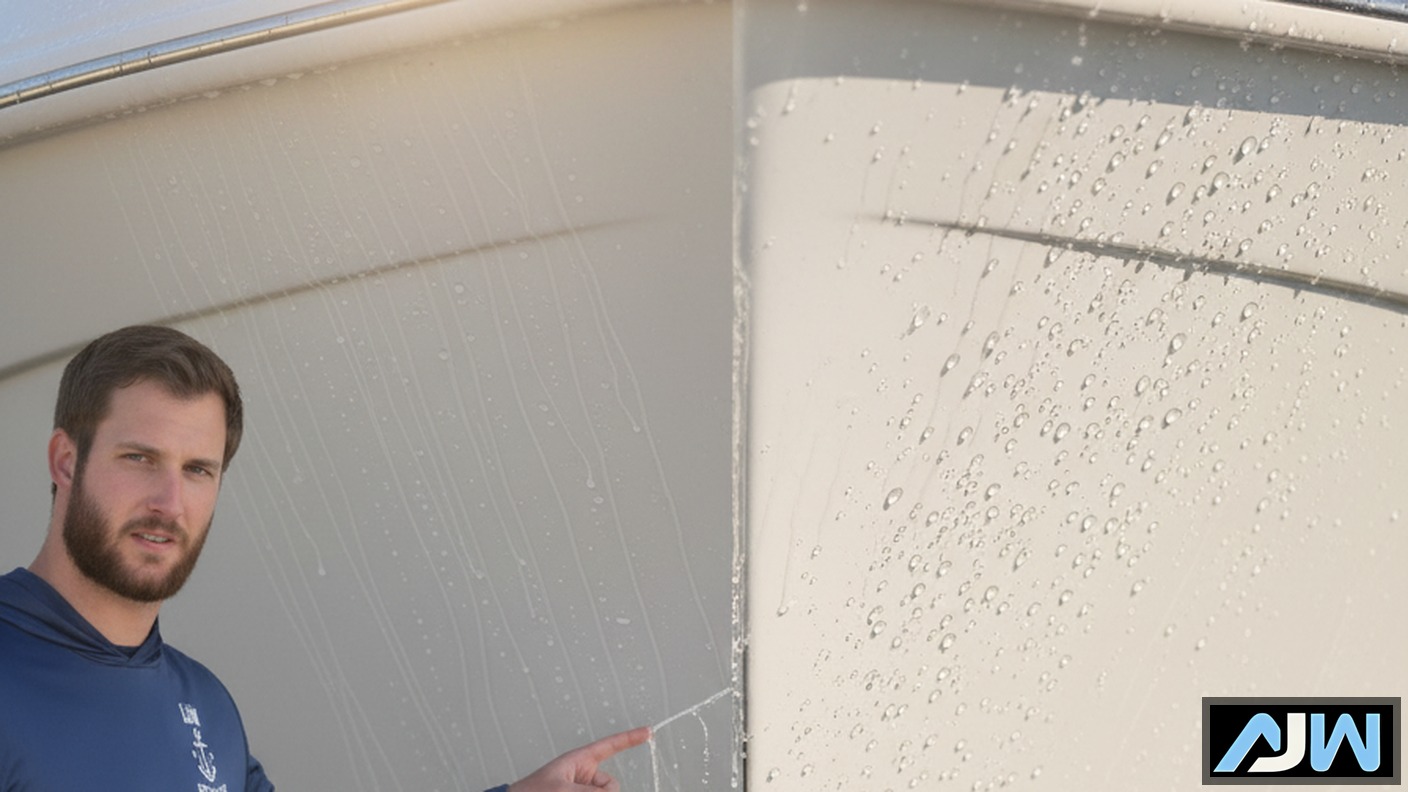
Most boat owners look at the green film on their hull after winter and think a pressure wash will handle it. I see this every spring on Lake Norman — Crown Harbor, Safe Harbor, Holiday Harbor — and I'll tell you straight: that algae isn't sitting on the surface. It's bonding into the pores of your gel coat.
Left alone, algae etches. It creates microscopic pitting that traps more growth next season. What started as a cosmetic issue becomes a gel coat integrity problem. I've pulled boats out of winter storage at River City Marina that looked fine from ten feet away but had permanent staining at the waterline because nobody addressed the algae when it was still removable.
Why Winter-Stored Boats Have It Worst This Year
Lake Norman's water levels have been running 2–3 feet below normal through the 2026 drought. That means more hull surface sitting exposed to air while algae dries and bakes into the gel coat. The waterline ring on most boats isn't a narrow strip anymore — it's a wide band of mineral deposits, algae staining, and oxidation that extends further up the hull than anything I've seen in ten years on this lake.
Boats that sat on lifts or in covered slips all winter got hit too. The algae grows underwater during fall, then the lake drops and leaves that growth high and dry. By the time you're pulling the cover off in May or June, it's been curing onto the surface for months.
The Wrong Way to Remove It
Here's what I see go wrong at docks all over Cornelius and Mooresville every spring. Someone grabs a pressure washer, cranks it to 3,000 PSI, and blasts the hull. The algae comes off — along with a layer of clear coat and any wax protection that was there. Others scrub with stiff-bristle brushes and dish soap. That creates micro-scratches in the gel coat that make next season's algae grip even harder.
The worst approach is using straight muriatic acid on fiberglass. I've seen boat owners try this after watching it work on pontoon tubes, then spray it across the fiberglass hull too. Acid belongs on aluminum tubes with proper dilution and a rinse protocol. On fiberglass gel coat, it etches permanently.
What Proper Algae Removal Looks Like
The right sequence starts with a dedicated marine hull cleaner — not a general-purpose soap. The cleaner breaks the organic bond without cutting into the gel coat. I apply it, let chemistry do the work for 3–5 minutes, then agitate lightly with a soft wash mitt. No pressure washer on the first pass.
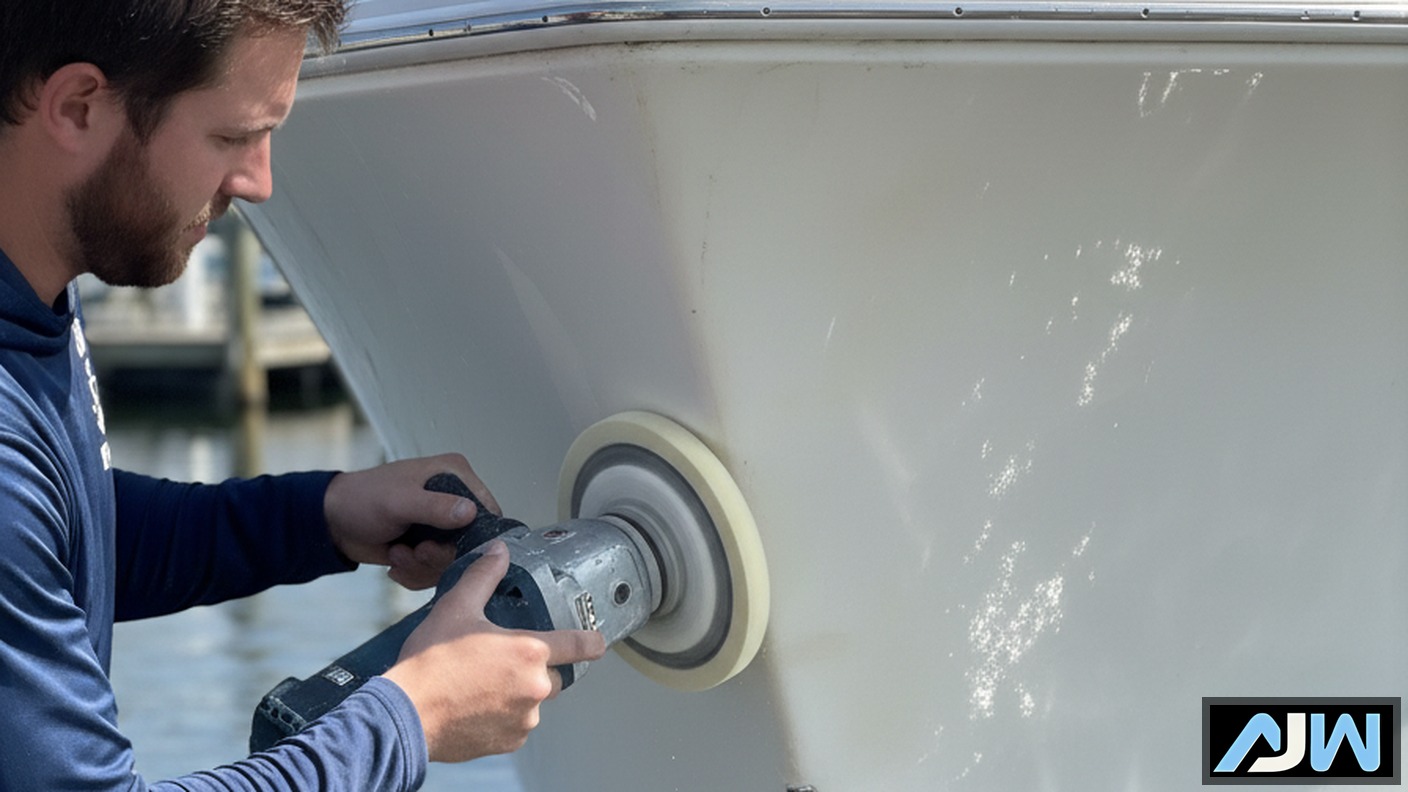
If staining has already set into the pores, the next step is a light compound with a dual-action polisher. This levels the surface and pulls embedded discoloration out. Follow that with a polish to restore gloss, then an IPA wipe to strip any residue before applying protection — whether that's a marine sealant or a full ceramic coating.
Pontoon Tubes vs Fiberglass Hulls — Different Problems
These are two completely different jobs. Aluminum pontoon tubes need an aluminum brightener to dissolve the oxidation and algae buildup. I use a dedicated aluminum-safe acid wash, work it in sections, and rinse thoroughly before it dries. You never use aluminum brightener on fiberglass — it will cloud the gel coat beyond repair.
Fiberglass hulls get the compound-and-polish sequence I described above. On a white hull, you'll see the difference immediately — the chalky, yellowed sections come back to a hard gloss. On darker hulls, swirl marks from improper scrubbing become visible during this stage, which is when I decide if a full paint correction is needed or just a polish pass.
How to Keep Algae From Coming Back
Ceramic coating: A Glidecoat Pro ceramic application creates a hydrophobic barrier that algae struggles to grip. It won't stop growth entirely, but it makes removal dramatically easier and protects the gel coat from etching between washes. I've coated over 1,200 boats on Lake Norman and the difference in seasonal maintenance is night and day.
Regular wash schedule: Even with a coating, a monthly dock-side wash during boating season keeps algae from establishing. I come to your dock — Crown Harbor, Safe Harbor, Jetton Park, wherever you keep the boat.
Pre-winter hull cleaning: If your boat sits on a lift, get the hull cleaned before raising it for winter. Algae that dries on an elevated hull is ten times harder to remove than algae that stays submerged.
Don't Let Winter Algae Cost You a Gel Coat Restoration
The difference between an algae cleaning now and a full gel coat restoration later in the summer is timing. If your boat has been sitting since last fall and you haven't addressed the hull yet, the window for an easy fix is closing fast. I'm Alex Adams with AJW Detailing — I run a mobile dock-to-dock service across Lake Norman from Cornelius to Denver to Sherrills Ford. Call me at (704) 594-3948 and let's get your hull right before it gets worse.