Ceramic Coating vs Wax for Your Boat: Honest Take
The Question Every Boat Owner on Lake Norman Asks
If you've spent any time at Crown Harbor, Safe Harbor, or River City Marina this spring, you've probably heard someone at the dock talking about ceramic coating. And then someone else chimes in with "I've been waxing my boat for twenty years and it looks fine."
Both of them are partially right. I've been detailing boats on Lake Norman for over ten years, and I've applied ceramic coating to more than 1,200 hulls. I've also waxed plenty of boats where ceramic didn't make sense yet. Here's the honest breakdown — when each one works, when it doesn't, and what actually matters for your gel coat.
What Wax Actually Does to Your Gel Coat
Marine wax — usually carnauba-based — sits on top of your gel coat and fills in microscopic pores. It creates a temporary barrier against UV, salt, and water spots. It adds a nice shine. And that's about it.
On Lake Norman right now, with the water still 2+ feet below normal and Duke Energy's drought advisory still active, boats are sitting higher on their lifts. That means more hull exposed to direct sun, more UV hitting gel coat that normally sits below the waterline. A single coat of wax lasts 30 to 60 days in those conditions — less if you're washing frequently or running through pollen-heavy weeks like we've had this May.
Wax doesn't bond to the surface. It wears off. Every wash with the wrong soap strips it faster. And once it's gone, your gel coat is unprotected until you reapply.
What Ceramic Coating Does Differently
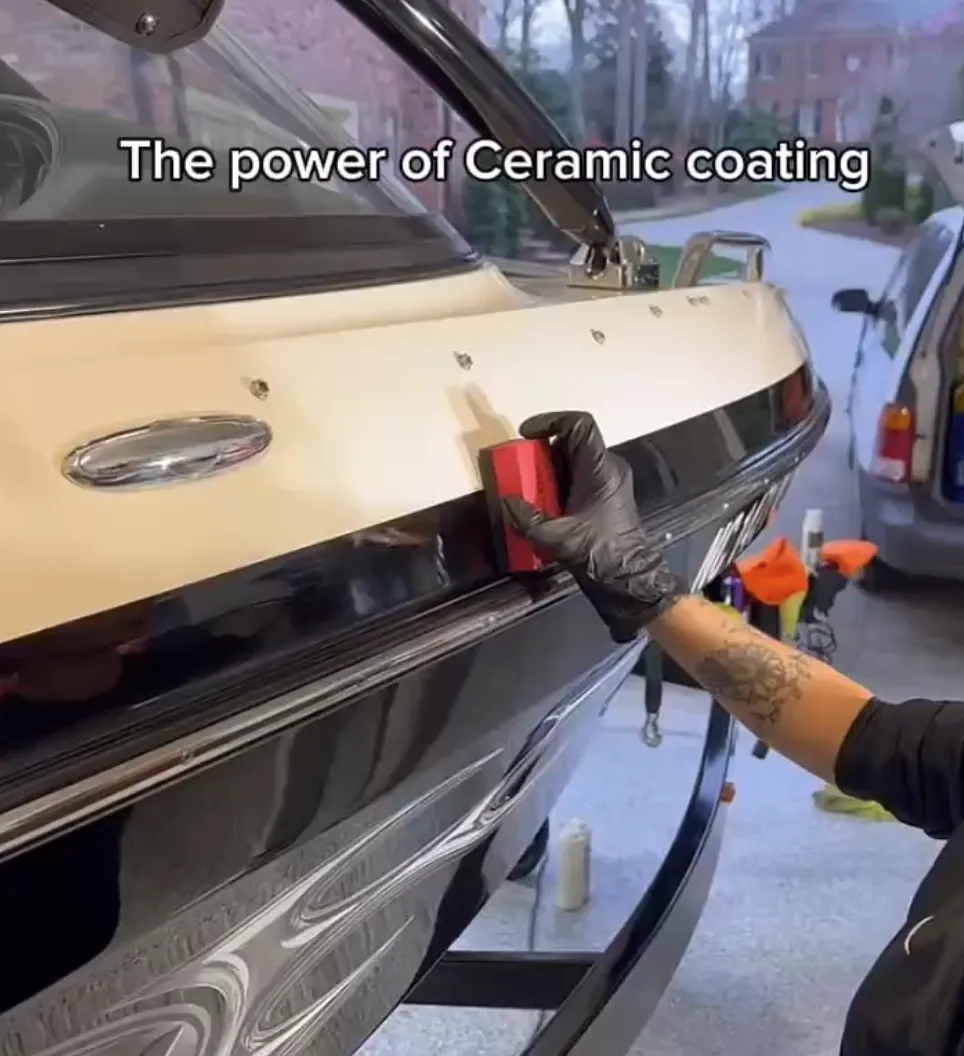
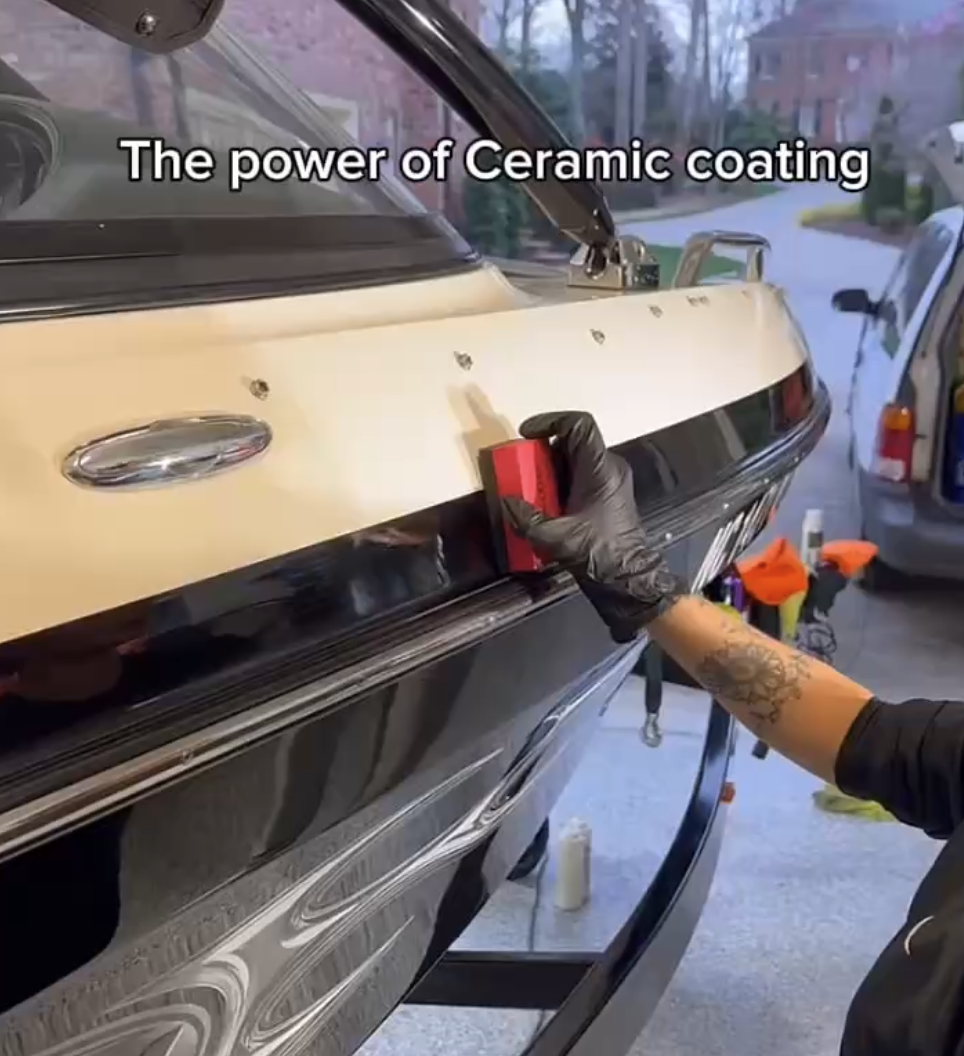
Ceramic coating is a silica-based liquid that chemically bonds to your gel coat. It doesn't sit on top — it becomes part of the surface. Once it cures, it creates a hard, hydrophobic layer that repels water, UV, bird droppings, pollen, and dock grime.
The coating we use at AJW is Glidecoat — I'm a certified Pro applicator, and I've used it on everything from 18-foot bowriders to 45-foot cruisers docked at Holiday Harbor and Jetton Park. A properly applied ceramic coat lasts 18 to 24 months, sometimes longer depending on how much sun exposure the boat gets and whether the owner keeps up with basic rinse-downs.
But here's the part most detailers skip: ceramic coating is not a shortcut. Before any coating goes on, the gel coat has to be clean down to bare surface. That means a full wash, clay bar or decontamination pass, then wet sand, compound, and polish if there's any oxidation. After all that, we do an IPA wipe to strip every last oil and residue. Then — and only then — does the ceramic go on.
If someone tells you they can ceramic coat your boat in two hours, they skipped at least three of those steps.
Durability: Real Numbers, Not Marketing
Here's what I've seen across 1,200+ boats on Lake Norman:
Marine wax: 30–60 days of real protection. By the third month, UV is hitting bare gel coat again. On a boat that lives on a lift in full sun at Brawley School Road or Hwy 150, you're looking at the low end of that range.
Ceramic coating (Glidecoat Pro): 18–24 months of measurable hydrophobic performance. We verify with a gloss meter — fresh coating reads in the mid-90s to 100+. At the 12-month mark, most boats we've coated still read above 85.
That's a real difference. Wax means 6 to 8 applications per year if you're staying protected. Ceramic means one application that lasts through an entire boating season and into the next.
When Wax Is the Right Call
I'm not going to tell you ceramic is always the answer. It's not. Here's when wax makes more sense:
Your boat is under 5 years old with perfect gel coat. If there's zero oxidation, no scratches, and the gloss is still factory-fresh, a good carnauba wax every 6 to 8 weeks will keep it looking sharp. You're maintaining, not restoring. Wax handles that fine.
You're selling the boat this season. If the boat is going on the market before fall, spending on a full ceramic job doesn't make financial sense. A detail and wax will make it show well for 60 days — plenty of time to close a sale.
You trailer your boat and store it covered. If your boat isn't sitting on a Lake Norman lift baking in UV 300 days a year, the calculus changes. Covered storage dramatically reduces UV exposure, and wax handles the lighter duty.
When Ceramic Coating Pays for Itself
If your boat lives on a lift or at a dock — Crown Harbor, Safe Harbor, any of the Mooresville or Denver marinas — ceramic coating isn't optional. It's math.
Six to eight wax jobs per year, even DIY, costs time and product. Professional waxing runs $300 to $500 per application on a 24-foot boat. Do that four times a year and you've spent $1,200 to $2,000 — for protection that lapses between each visit.
A ceramic coating job costs more upfront, but you're covered for 18 to 24 months. No reapplication. No gaps in protection. And your gel coat stays easier to clean the entire time because contaminants slide off the hydrophobic surface instead of embedding in unprotected pores.
With Lake Norman's drought dropping water levels and exposing more hull to UV, the boats that aren't coated are oxidizing faster right now. I've seen gel coat on uncovered boats at Jetton Park age two seasons' worth of damage in a single summer when conditions are like this.
What About Hybrid or Spray Ceramic Products?
The marine aisle at West Marine is full of spray-on ceramic products now. Here's what they actually are: wax with ceramic particles suspended in it. They last longer than straight carnauba — maybe 90 days instead of 60 — but they don't chemically bond to the gel coat the way a true professional ceramic coating does.
They're fine as a maintenance layer between professional details. I tell boat owners to use a ceramic spray sealant as a drying aid after rinse-downs. It helps. But it's not a substitute for a real ceramic application any more than spray paint is a substitute for a body shop.
The Bottom Line from 10 Years on the Lake
If your boat sits on Lake Norman exposed to sun, pollen, and now drought-level low water — ceramic coating is the better investment. Period. The upfront cost pays back in gel coat preservation, easier maintenance, and skipping the wax cycle entirely.
If your boat is garage-kept, new, or on its way to a new owner, wax works. No shame in it.
Either way, the worst option is doing nothing. Unprotected gel coat oxidizes fast in North Carolina UV, and once oxidation sets in deep, you're looking at a wet sand and compound job before any protection can go on top.
We're booking through Memorial Day weekend right now. If you want your boat coated before the busiest weekend of the year on May 25, give us a call at (704) 594-3948. We come to your dock — Cornelius, Mooresville, Davidson, Denver, wherever you keep it. No hauling required.