DIY vs Professional Boat Detailing on Lake Norman
I Get It — You Want to Save the Money
Every season I hear the same thing at Crown Harbor and Safe Harbor: "I'll just wash it myself this weekend." And honestly? Sometimes that's the right call. If your boat is in decent shape — no oxidation, no waterline staining, the vinyl is clean — a maintenance wash is absolutely something you can do yourself on a Saturday morning.
But here's where it gets tricky. After a summer on Lake Norman, most boats are not in "maintenance wash" shape. They've been sitting in UV from April through September. The water has been 3 to 4 feet below full pool all year, so more hull has been exposed to sun than usual. That's where the conversation changes.
What DIY Actually Costs You
The dollar figure looks good on paper. A gallon of boat soap, a few microfiber towels, maybe a bottle of spray wax — you're in for under $50. That's a fraction of what a professional detail runs.
But that $50 doesn't account for the three things that actually determine whether your gel coat survives the winter looking good: product knowledge, equipment, and knowing when to stop.
The Product Problem
Marine surfaces are not car surfaces. I've pulled into jobs at River City Marina where somebody used a car compound on their gel coat and burned through the clear. I've seen aluminum brightener used on fiberglass — that's a chemical burn that no amount of polishing will fix. These aren't rare mistakes. They happen every fall on this lake.
The right sequence for oxidized gel coat is wet sand with 1000 or 1500 grit, then a cutting compound, then a finishing polish. Miss a step and you leave scratches. Use the wrong grit and you create new damage. It's not complicated once you've done it over a thousand times, but there's a real learning curve.
The Equipment Gap
A dual-action polisher runs $150 to $300. Backing plates, pads in three or four grits, compounds, polishes — you're looking at another $100 to $200. Then you need an IPA wipe-down solution for surface prep. If you want to apply ceramic coating afterward, the coating itself is $80 to $150 for a single application.
For one detail, you could easily spend $400 to $600 in gear and product. That's close to what a professional full detail costs on a 24-foot boat — and you still have to do the work.
When DIY Makes Real Sense
I'm not here to tell you that every boat owner needs a pro every time. There are jobs that are genuinely worth doing yourself:
- Weekly wash-downs between details — soap, rinse, dry. Keeps contaminants from bonding to the surface.
- Vinyl wipe-downs with a marine-grade UV protectant after every few outings.
- Spot-cleaning bird droppings, fish blood, or sunscreen before they etch into the gel coat.
- Canvas cleaning and reproofing if you've got the right marine fabric cleaner — not household detergent.
These are maintenance tasks. They're not correction work. The distinction matters because maintenance preserves what's already in good shape, while correction fixes what's already gone wrong.
When You Need a Pro
The honest answer is: when the surface has deteriorated past what soap and a sponge can address. Here's what that looks like on Lake Norman heading into fall.
Oxidation
If your white gel coat looks chalky or has a yellow cast, that's UV oxidation. It's not dirt — it's the top layer of the gel coat breaking down. No amount of washing removes it. It requires abrasive correction: compound and polish, sometimes starting with wet sanding. This is a multi-step process that takes a trained hand and the right equipment to get right without causing more damage.
Waterline Staining
With the drought keeping Lake Norman 3 to 4 feet below normal pool this year, waterline rings have been sitting higher on hulls and pontoon tubes all season. That mineral and algae staining needs specific chemical treatment followed by mechanical correction. Scrubbing harder with a Magic Eraser is how pontoon tubes get scratched.
Ceramic Coating Application
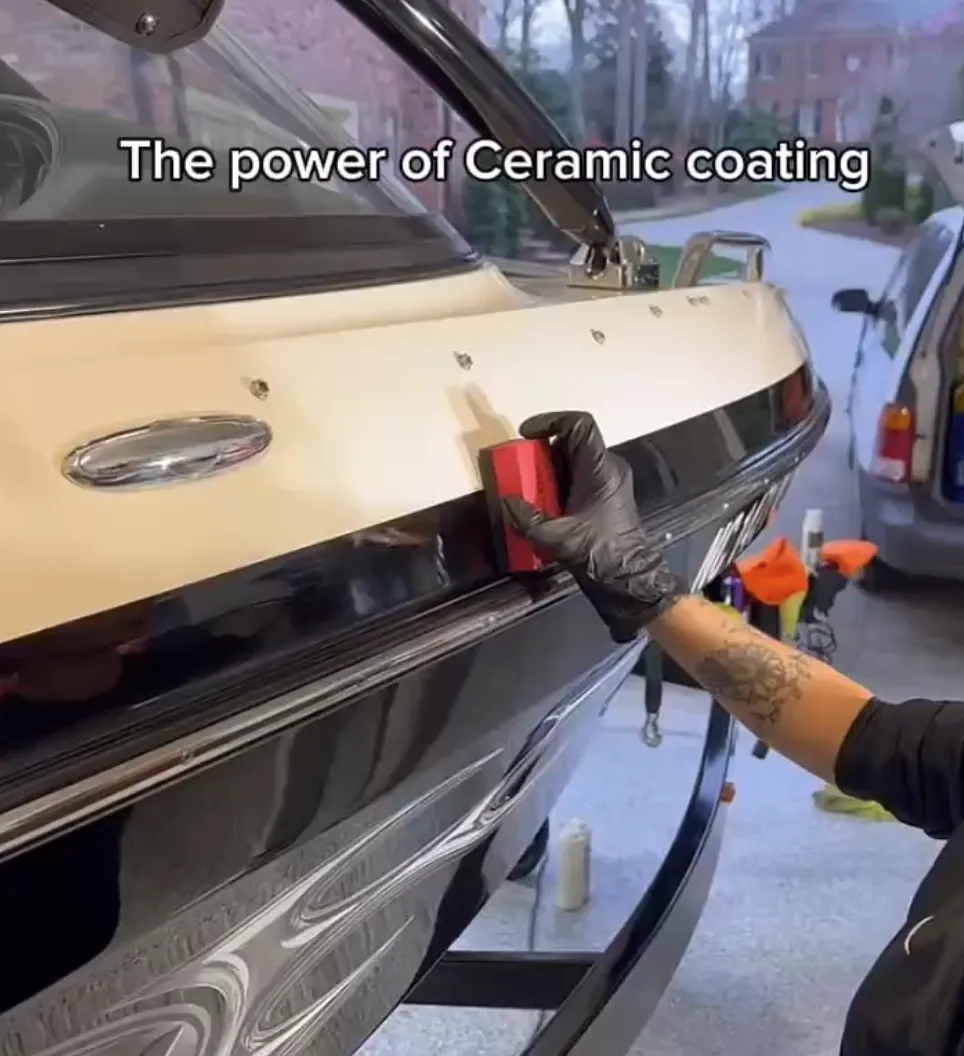
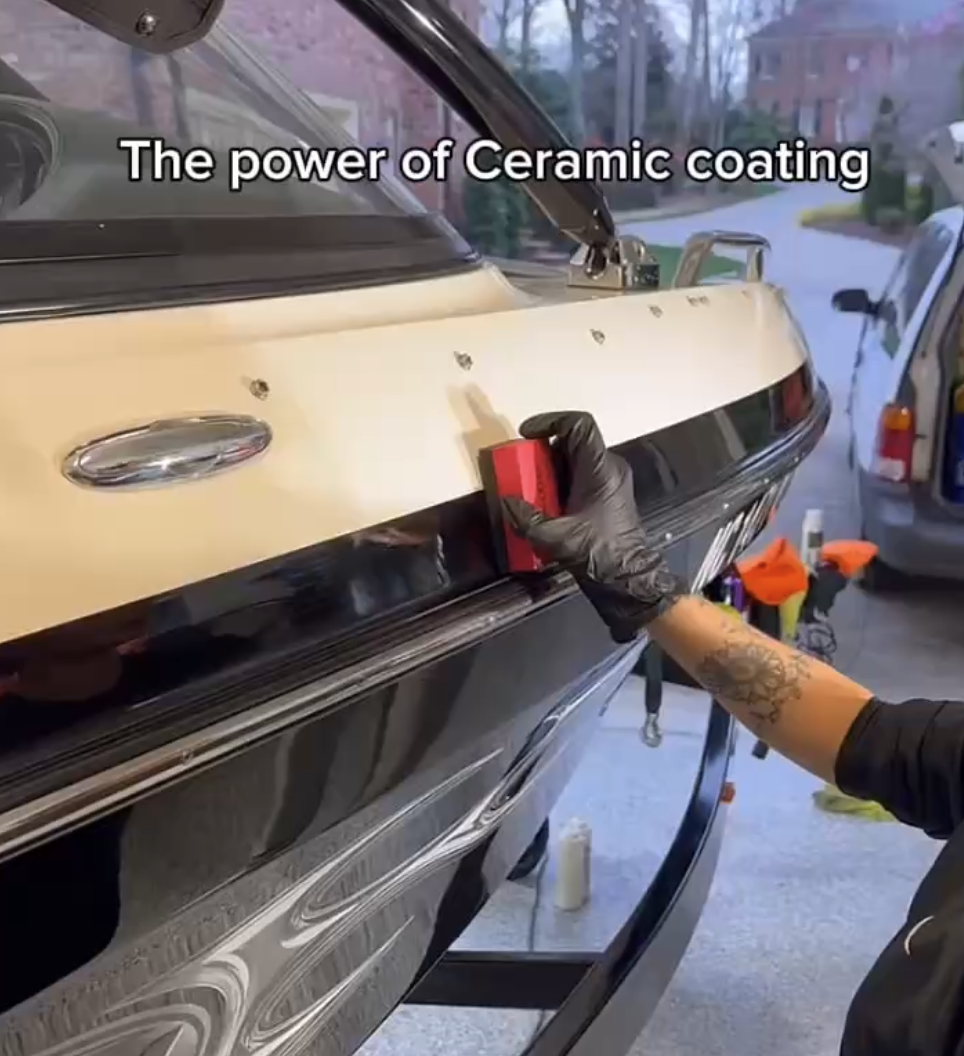
Ceramic is not a wax. You can't apply it casually. The surface has to be corrected to at least a 90 on the gloss meter before the coating goes on, or you're locking in defects under a layer that's going to last two to three years. The IPA wipe, the application technique, the cure time — if any of those are off, the coating fails early. I've recoated boats where the owner applied ceramic over oxidation. That's a strip-and-start-over job.
The Real Comparison
A professional full boat detail on Lake Norman typically runs $15 to $25 per foot for exterior correction with polish and sealant. Ceramic coating adds more on top. A 24-foot pontoon exterior detail is roughly $400 to $500. A full interior and exterior is $600 to $800 depending on condition.
A DIY first-time setup — polisher, pads, compounds, polishes, cleaners, protectants — runs $400 to $600 plus a full weekend of your time. If you detail once a year, the math doesn't favor buying all that equipment. If you detail every two weeks through the season, the investment starts to make sense for wash-and-protect work.
The middle ground that most Lake Norman boat owners land on: do your own maintenance washes between outings and hire a pro for correction work once or twice a season. That's what keeps the gel coat alive without spending every Saturday on the dock with a polisher.
What AJW Brings to the Dock
I've been on Lake Norman for over 10 years. I'm Glidecoat Pro Certified, and I've personally coated more than 1,200 boats. I bring the polisher, the compounds, the gloss meter, and the experience to your dock — Crown Harbor, Safe Harbor, River City Marina, Holiday Harbor, anywhere on the lake. Mobile dock-to-dock service means you don't trailer your boat anywhere.
If your boat needs more than a soap-and-water wash this fall, or you want ceramic coating done right before winter storage, give me a call at (704) 594-3948. I'll tell you straight whether you need a full correction or if a maintenance detail will get the job done.