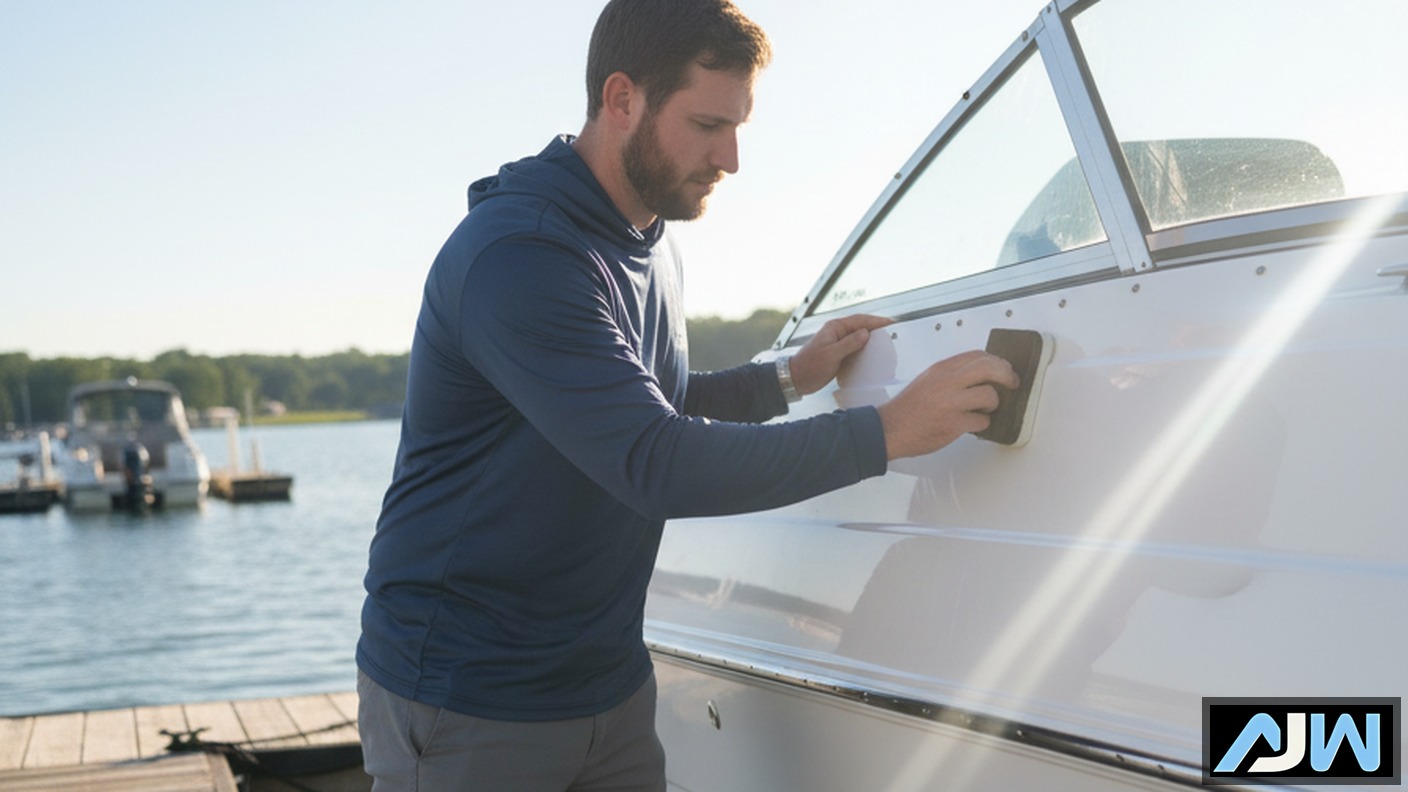
Gel Coat Oxidation on Lake Norman — Summer UV Fix

Why Summer Is When Oxidation Does the Most Damage
If your boat has been sitting on a lift or at a dock on Lake Norman since April, the gel coat has been absorbing UV radiation for close to three months straight. That is not a small amount of exposure. From late April through September, the UV index around Cornelius, Mooresville, and Denver regularly hits 10 or 11 during peak afternoon hours. That kind of sustained radiation breaks down the resin structure inside your gel coat at the molecular level.
What you see on the surface is the result — a chalky white haze that was not there when you launched in the spring. On white hulls, it shows up as yellowing. On darker gel coat, it looks like the color faded overnight. Either way, it means the protective layer is deteriorating, and once it starts, it accelerates unless you intervene.
What Oxidation Actually Is — And Why It Matters
Gel coat oxidation is not just cosmetic. When UV rays hit the surface, they cause the polyester resin molecules to lose electrons and form free radicals. Those free radicals degrade the surrounding material, creating a porous, chalky layer on top of what was once a smooth, glossy finish. That porous surface then traps dirt, pollen, waterline minerals, and algae — which accelerates the breakdown even further.
I measure every hull with a gloss meter before I start any correction work. A factory-fresh gel coat reads in the high 80s to low 90s on that meter. Most boats I see on Lake Norman that have sat through a full summer without protection are reading in the 20s or 30s. That is a significant loss of surface integrity, not just shine.
The Drought Factor in 2026
This year has made things worse. Lake Norman water levels have been running 2 to 3 feet below normal since spring. That means more hull surface area is exposed to direct sunlight than in a typical year. Boats on lifts at Crown Harbor, Safe Harbor, and Holiday Harbor are showing oxidation bands that extend further down the hull than I normally see in June. The waterline has dropped, and the sun has had access to gel coat that is usually underwater.
If your boat sits on an open lift with no cover, you are dealing with the worst combination — full UV exposure on a wider surface area for more hours per day than the gel coat was designed to handle.
How I Fix It — The Actual Process
There is no shortcut to reversing gel coat oxidation. A quick wash and wax will not touch it once the surface has gone chalky. Here is what actually works:
Assessment: Gloss meter reading on multiple hull sections to determine how deep the oxidation goes. If the readings are below 30, we are wet sanding. If they are in the 40s or 50s, we can start with compound.
Wet sanding (when needed): Starting at 1000 or 1500 grit depending on severity, working through progressively finer grits. This removes the dead layer of gel coat without cutting too deep.
Compound: Marine-grade cutting compound on a dual-action polisher to remove sanding marks and begin restoring clarity.
Polish: Finishing polish to bring the surface back to a mirror finish. This is where you see the gloss meter jump from the 30s into the 80s and 90s.
Protection: Either marine sealant or ceramic coating depending on the owner's goals. Ceramic lasts 2 to 3 years. Wax lasts 3 to 4 months in Lake Norman summer conditions.
Ceramic Coating vs. Wax After Oxidation Removal
Once the gel coat is corrected, you have a choice. Wax is less expensive upfront and works fine if you are willing to reapply every 3 to 4 months during boating season. Ceramic coating costs more initially but reflects UV radiation at the molecular level, which means the oxidation cycle slows down dramatically. Most of the boats I coat with Glidecoat Pro are still reading in the 80s on the gloss meter a full year later — even boats that sit uncovered at River City Marina or on open lifts off Brawley School Road.
The honest answer is that ceramic coating is worth it if you plan to keep the boat for more than one season. If you are selling at the end of this summer, a good compound and wax job will make it look right for the listing photos without the coating investment.
Signs Your Boat Needs Oxidation Correction Now
You do not need a gloss meter to know something is wrong. Run your hand across the hull above the waterline. If your fingers come away with a chalky white residue, the gel coat is actively oxidizing. If the hull looks hazy or dull even after a wash, the damage is below the surface layer and a wash will not fix it. If you see distinct color differences between areas that were shaded versus areas in direct sun, that is UV damage drawing a line for you.
Mid-summer is actually the best time to correct oxidation — not fall. The longer you wait, the deeper it goes, and the more gel coat has to come off during wet sanding. Catching it in June or July means less material removal and a better long-term result.
Book Your Gel Coat Correction Before Peak Season Ends
I work dock-to-dock across Lake Norman — Cornelius, Mooresville, Denver, Davidson, Sherrills Ford, Catawba, and everywhere in between. If your hull is showing signs of oxidation, I can get a gloss meter on it, tell you exactly where it stands, and lay out what it takes to bring it back. Call or text (704) 594-3948 to set up a time. I will come to your dock.