How Lake Norman's 2026 Drought Damages Boat Hulls

Three Feet Lower and Counting
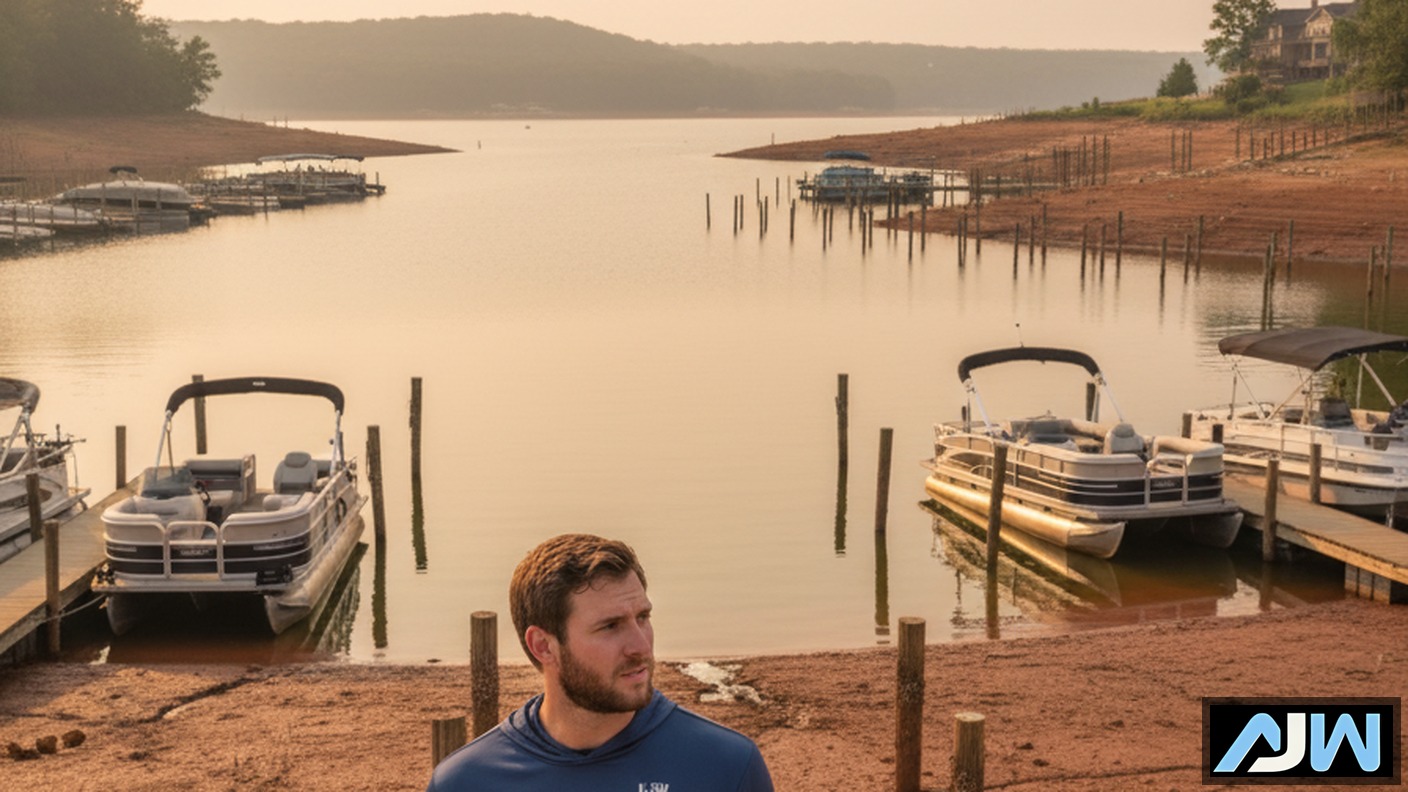
If you've launched your boat on Lake Norman this spring, you already know something is off. The lake is sitting three to four feet below target level — the lowest we've seen during boating season since 2007. Duke Energy moved the Catawba-Wateree basin into Stage 2 of the Low Inflow Protocol back on May 1, and recreation flow schedules are suspended. Blythe Landing has four ramps closed because the water pulled back that far.
For boat owners, the drought isn't just an inconvenience at the ramp. It's actively damaging hulls in ways that won't be obvious until the damage is already baked in. I've been detailing boats on this lake for over ten years, and what I'm seeing right now on hulls and pontoon tubes is worse than a typical June — by a wide margin.
More Hull Exposed Means More Oxidation
Here's what most people don't think about: when the lake drops three feet, every boat on a lift or in a slip has three additional feet of hull sitting in open air. That gel coat was designed to stay submerged or at least shaded. Instead, it's been baking in direct NC sun since March.
I'm pulling boats off lifts at Crown Harbor and Safe Harbor that have oxidation bands twice as wide as last year. That chalky white film on your hull — the stuff that makes a white boat look gray and a colored hull look washed out — normally sits in a narrow strip at the waterline. Right now it runs from the old waterline all the way down to where the water actually is. On some boats, that's a 36-inch band of oxidation that didn't exist last summer.
The fix isn't complicated, but it's more work than a normal season. What would usually be a single-stage polish is turning into a full wet sand, compound, and polish sequence. That's three passes on gel coat that only needed one last year.
Submerged Debris Is Leaving Real Damage
The drought is also putting hazards closer to the surface. Tree stumps, rocks, sandbars — all the stuff that normally sits four or five feet below your hull is now barely under the waterline. I've seen a noticeable jump in hull scratches and dock rash this season, especially on the Lincoln County side where the coves run shallow to begin with.
One of my clients at River City Marina hit something near a sandbar off Hwy 150 and came back with a gouge that ran 18 inches along the starboard side. That kind of damage needs compound and fill before you can even think about polishing or coating. It's happening more this year because the clearance just isn't there.
What Dock Rash Looks Like in Low Water
Even boats that never leave the slip are getting beat up. Lower water means your boat sits differently against the dock bumpers. The rub points shift. I'm seeing scratches and scuff marks in places that don't normally make contact — lower hull panels, below the rub rail, even along pontoon tubes that usually sit well above the dock line.
Pontoon Tubes Are Getting Hit Hard
Pontoon owners, pay attention. Your aluminum tubes are more exposed than usual, and aluminum doesn't handle UV and standing water the same way fiberglass does. The tubes on boats at Holiday Harbor and the private docks off Brawley School Rd are showing heavy water spotting and early-stage pitting where they've been sitting in the air-water transition zone.
The fix is an aluminum brightener treatment followed by a protective sealant. I never use aluminum brightener on fiberglass — it'll damage gel coat — but on the tubes themselves it strips the oxidation and water deposits back to clean metal. Then we seal to slow it down for the rest of the season.
What You Should Prioritize Right Now
If your boat has been sitting on a lift or in a slip since March, here's what I'd handle first:
Get the waterline scrubbed and the exposed hull assessed. Don't wait until fall — oxidation gets harder to remove the longer it bakes in UV.
If you see chalky or faded areas below the old waterline, that needs compound and polish at minimum. Wet sanding if it's severe.
Check your hull for new scratches or gouges from debris contact. Anything that broke through the gel coat needs attention before water intrusion starts.
Pontoon owners: have the tubes inspected for pitting and water spots. An aluminum brightener treatment now saves you from replacement-level corrosion later.
Ceramic Coating Changes the Math
I'll be direct — ceramic coating doesn't prevent scratches from running over a submerged stump. Nothing does. But it significantly changes how your gel coat handles the UV exposure that this drought is amplifying. A Glidecoat Pro ceramic coating creates a sacrificial barrier between the sun and your gel coat. I'm measuring boats we coated last fall that still pull gloss meter readings in the mid-90s, even with all this extra exposure. Uncoated boats next to them in the same marina are in the 60s.
If you're thinking about coating, the prep work matters more than ever right now. We do full paint correction before any ceramic application — no shortcuts. IPA wipe, gloss meter verification, then the coating goes on clean corrected gel coat. That's how you get results that actually last through a season like this one.
Black Boat Weekend Is Next Week
June 19 through 21 is Black Boat Weekend — the biggest gathering on Lake Norman all year. Five hundred plus boats on the water around Dog Island. If your hull looks rough from sitting through this drought, now is the time to get it handled. I've got slots open this week for hull correction and detail work. We come to your dock — Crown Harbor, Safe Harbor, River City, Holiday Harbor, wherever your boat sits.
Call or text (704) 594-3948 to get on the schedule before the weekend fills up. Let's get your boat looking right before the biggest day on the lake.