Oxidation on Your Gel Coat Isn't Just Cosmetic — Here's What It's Actually Doing
Oxidation on Your Gel Coat Isn't Just Cosmetic — Here's What It's Actually Doing
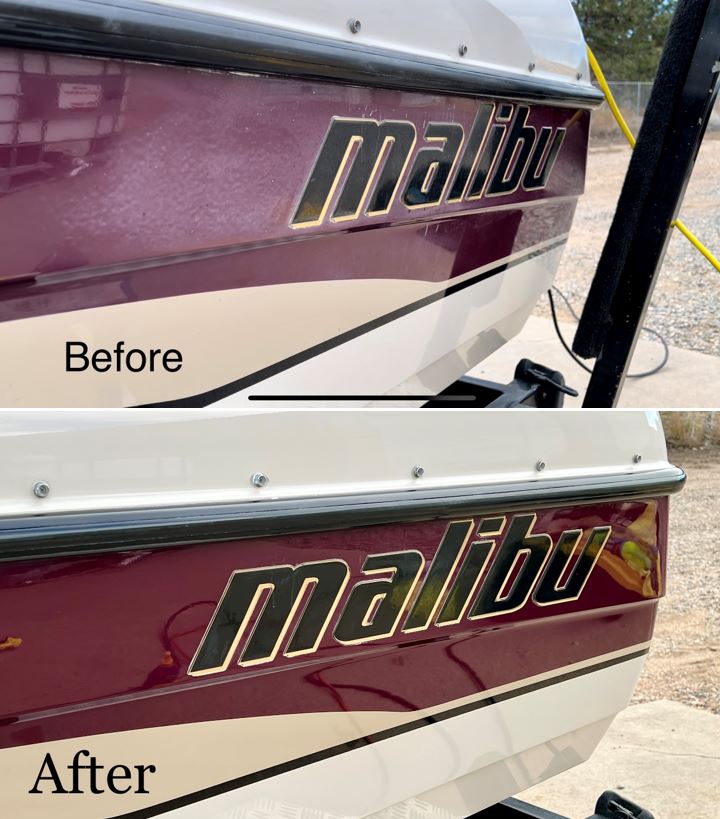
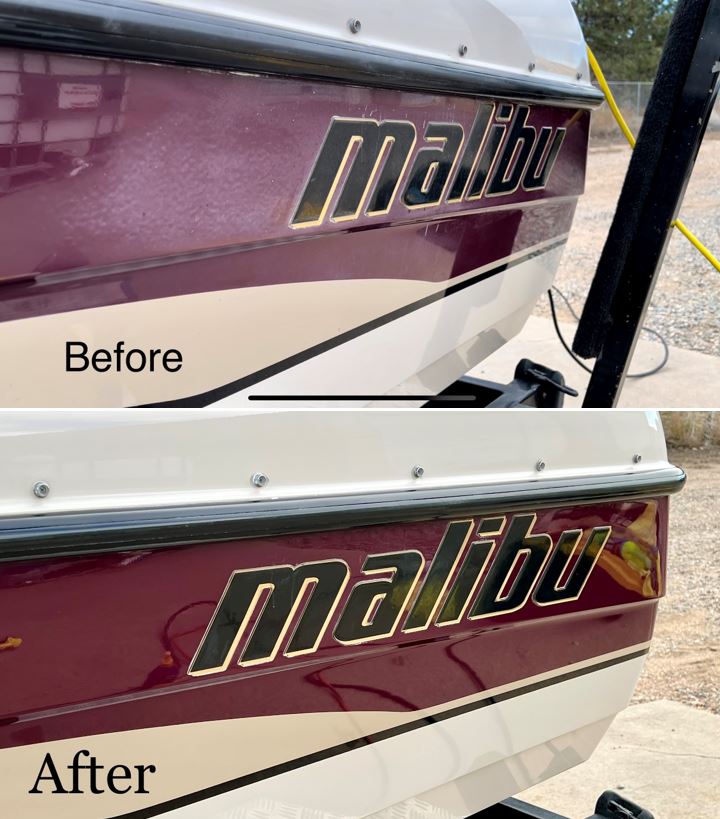
You've probably noticed it. That chalky, dull coating on your boat's hull that won't come clean no matter how hard you scrub. It looks bad, sure, but most boat owners assume it's just a surface problem. They're wrong. Oxidation is actively destroying your gel coat's structural integrity, and the longer you wait to address it, the more expensive the repair becomes.
What Oxidation Actually Is
Oxidation isn't just discoloration. It's a chemical breakdown of the resin that holds your gel coat together. When UV light and oxygen work on gel coat, they break the molecular bonds in the polyester resin. Those broken bonds create a porous, degraded surface layer that we see as chalking or hazing.
Once oxidation starts, it accelerates. The damaged layer is no longer a protection barrier. It becomes a highway for water infiltration, salt spray penetration, and further UV exposure. Water doesn't just sit on oxidized gel coat anymore, it soaks in. That's when you get something far worse than cosmetic damage: structural weakening, osmotic blistering, and gel coat failure.
On Lake Norman, boats are exposed to constant sun reflection off the water, which intensifies UV impact compared to land-based vehicles. That means oxidation here moves faster than it would inland.
The Structural Cost of Waiting
Gel coat doesn't repair itself. Once those molecular bonds break, they don't reconnect. You can't just buff it and expect it to recover. If oxidation has progressed from surface chalking to a visibly weakened or pitted surface, you've crossed into territory where oxidation removal alone won't fix it. You might need gel coat repair or resurfacing, which costs significantly more than preventive oxidation removal.
Here's the timeline most boat owners don't realize they're on. Light oxidation, caught early, takes a few hours and a moderate investment to remove. Moderate oxidation, where the chalking is heavy and penetrates deeper, takes longer and costs more. Severe oxidation, where the gel coat is compromised and needs repair, turns into a multi-day, multi-thousand-dollar project.
The difference between a $500 oxidation removal and a $5,000 gel coat repair is often just a few months of delay. That's not an exaggeration, that's the math of how fast oxidation spreads once it's gotten a foothold.
Why Measurement Matters
You can't make a smart decision about your boat's gel coat without knowing what you're actually looking at. That's why I use a laser gloss meter on every boat. Before we even talk about the scope of work, I measure the gloss value of your damaged area and compare it to areas that are protected or less damaged.
A healthy gel coat on a boat sits around 80-90 gloss units. Oxidized gel coat drops significantly, often into the 40-60 range depending on severity. That number tells you exactly how much the gel coat has degraded. It's objective data, not visual guessing.
Once we've done oxidation removal, we measure again. That meter tells us whether we've recovered the gel coat back to acceptable levels or whether the damage is too deep for removal alone. You're not taking my word for it. You're seeing the numbers.
Most detailers won't measure. They polish, step back, and say it looks good. I measure it, document it, and give you data showing the actual improvement. That's accountability, and it's the only way to know if your gel coat is actually recovering or if you need a different approach.
The Timing Problem This Year
We're in early March, and Lake Norman is about to enter its most intense UV season. UV exposure here climbs hard from April through September, peaking in June and July. If your boat has visible oxidation right now, that oxidation is going to accelerate dramatically once the spring sun kicks in.
Boats that go untreated through March and April are often facing significantly worse oxidation by June. The damage compounds fast when UV exposure is high. You're not just letting oxidation sit there, you're giving it the perfect conditions to deepen and spread.
Our schedule fills up by April 1st. March is the window where oxidation removal can happen before the spring rush, before the heavy UV season intensifies the damage, and before our calendar gets locked up for months. If you're thinking about addressing oxidation on your boat, this is the time.
How to Get Your Boat Assessed
The process is simple and doesn't require a dock visit or long commitment. Take a few clear photos of the oxidized areas on your boat, hull, deck, anywhere you're seeing that chalking or dull finish. Include photos of areas that aren't oxidized so we can see the contrast. Send those photos along with a brief description of what you've noticed and when you'd like to have the work done.
From those photos, I can assess the oxidation depth and give you an accurate quote. You'll know what you're dealing with, what it'll cost, and when we can fit you in. No hidden surprises, no upsell pitch. Just honest assessment and straightforward pricing.
Oxidation won't fix itself, and waiting for summer won't make it cheaper to address. The best time to handle this is now, while we have March availability and before UV intensity makes the damage worse. Send those photos today and let's get your boat's gel coat protected before the season really begins.
Send photos of your boat to request a quote for oxidation assessment and removal.