Pollen Is Eating Your Car's Clear Coat Right Now
That Yellow Dust Isn't Just Annoying — It's Doing Real Damage
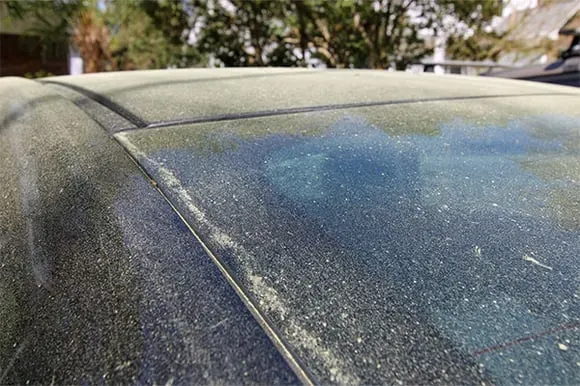
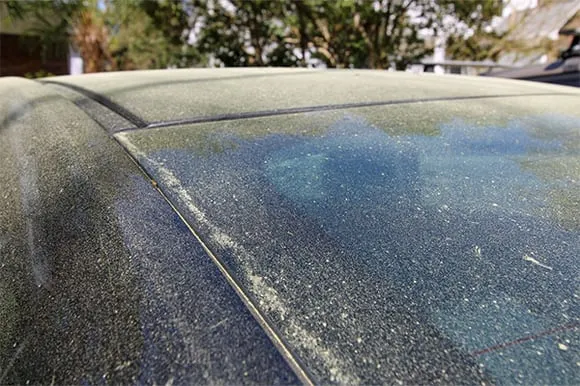
If you've walked outside anywhere near Lake Norman this month, you already know. Every car, truck, and SUV from Cornelius to Mooresville is wearing the same yellow-green film. Most people figure it's cosmetic — rinse it off when you get around to it, no big deal.
That's how clear coats get ruined.
Pollen grains — especially the pine and oak pollen we get here in the NC Piedmont — have microscopic barbed surfaces. Dry, they act like fine-grit sandpaper if you wipe them with a rag or run through a brush wash. Wet, they release acidic compounds that bond to your clear coat and start etching. Leave that yellow film on for a week of May rain and sun cycles, and you're looking at damage that a regular wash can't undo.
Why Lake Norman's Pollen Season Hits Cars Harder
We're not dealing with one type of pollen here. Lake Norman sits in the middle of a pine and hardwood canopy that runs from Brawley School Road all the way up through Troutman. Oak pollen peaked in April, pine pollen is dumping right now in May, and grass pollen is already ramping up behind it. That's three overlapping waves.
Add the drought conditions we've been dealing with — Charlotte is still 15-plus inches below normal rainfall since last August — and you've got pollen that isn't getting washed off by storms the way it normally would. It just sits there, baking into your paint under 85-degree sun.
If your car sits in a driveway off Jetton Park Road or under the oaks on Catawba Avenue in Cornelius, you know exactly what I'm talking about. Some of the cars we've detailed this month had pollen caked so thick it looked like someone had dusted them with yellow chalk.
What Happens If You Just Leave It
Here's the progression. Pollen lands on your paint. Morning dew or a light rain wets it. The acidic compounds in the pollen activate and start bonding with your clear coat. The sun comes out, bakes it in, and the cycle repeats. After a few rounds of this, you end up with etching — tiny pits in the clear coat that trap more pollen, more dirt, more moisture.
Once etching sets in, you can't wash it away. You need a clay bar treatment to pull the embedded contaminants, then a polish to level out the surface. If it's gone deep enough, you're looking at a multi-stage paint correction — wet sand, compound, polish — before the surface is smooth again.
I've seen cars that sat under pine trees for three weeks in May come in with clear coat damage that took a full day to correct. That's a problem a $30 car wash could have prevented if it had happened in week one.
The Wrong Way to Clean Pollen Off Your Car
The number-one mistake people make: grabbing a dry towel and wiping the car down. You're grinding those barbed pollen grains directly into your paint. Every swipe is a micro-scratch. Do that enough times and your black car looks hazy, your white car looks dingy, and your clear coat is compromised.
Running through an automatic brush wash isn't much better. Those brushes drag pollen, dirt, and grit across every panel. Touchless washes are safer, but they rarely have enough pressure to remove pollen that's already started bonding.
The Right Way
Rinse first. Use a pressure washer or garden hose to knock off as much loose pollen as possible before anything touches the paint. Then use a proper pH-neutral car wash soap with a microfiber wash mitt — two-bucket method if you have it. Work top to bottom. Pat dry with a clean microfiber towel. Never rub.
For pollen that's been sitting more than a few days, a foam cannon pre-soak makes a real difference. Let the foam dwell for three to five minutes before you touch the surface. That gives the surfactants time to break the pollen's bond with the clear coat.
How We Handle Pollen Season at AJW
When a car comes in during pollen season, we're not just washing it. We're decontaminating it. That starts with a thorough rinse, then a foam pre-soak, then a hand wash. After that, we clay bar the entire surface to pull anything the wash couldn't get — embedded pollen, rail dust, tree sap, the works.
Once the surface is clean and smooth, we assess whether the clear coat needs correction. If you've been driving around Mooresville or Davidson with pollen baked on for weeks, there's a good chance it does. We'll compound and polish any etched areas until the surface reads clean on a gloss meter.
Then we protect it. A paint sealant or ceramic coating goes on to create a hydrophobic barrier. That means the next time pollen lands on your car, it sits on top of the coating instead of bonding to the clear coat. A rinse knocks it right off. No etching, no scratching, no damage.
Ceramic Coating vs. Wax: What Actually Works Against Pollen
Wax is fine as a temporary barrier. It'll make your car easier to wash for about four to six weeks. But wax breaks down fast in UV exposure, and Lake Norman gets serious sun from May through September. By mid-June, that wax is mostly gone.
A paint sealant lasts longer — four to six months — and handles UV better. It's a solid middle ground if you're not ready for ceramic.
Ceramic coating is the real answer for pollen protection. A proper ceramic application bonds to the clear coat at a molecular level and lasts two-plus years. It creates a surface that's so slick pollen can't grip it. We use Glidecoat products on boats and cars — same ceramic technology, same durability. When pollen season hits, our ceramic-coated clients are washing their cars in five minutes with a hose and a microfiber. Everyone else is booking paint corrections.
When to Call AJW vs. Handle It Yourself
If you're washing your car every week or two and the pollen rinses off easily, you're probably fine doing it yourself. Keep up with it, use the right technique, and you'll get through May without issues.
Call us when the pollen has been sitting. If you can run your finger across the hood and feel texture — grit, roughness, anything that isn't smooth paint — you need a decontamination wash at minimum. If you can see haze, swirl marks, or dull spots that weren't there in March, you likely need paint correction before the damage gets worse.
We come to you. Driveway in Cornelius, parking spot in Huntersville, garage in Davidson — we bring everything we need. No drop-off, no waiting at a shop. Call or text Alex at (704) 594-3948 or check out our site https://ajwdetailing.com/ and we'll get your car cleaned up before this pollen season does any more damage.