Inside a Pontoon Boat Interior Detail Lake Norman

What a Season of Hard Use Does to a Pontoon Interior
If you run a pontoon on Lake Norman from April through October, the interior takes a beating. I see it every season — owners pull their seat cushions up in September and find black mold growing in the stitching, green algae creeping across the vinyl, and carpet that smells like lake water no matter how many times they hose it down.
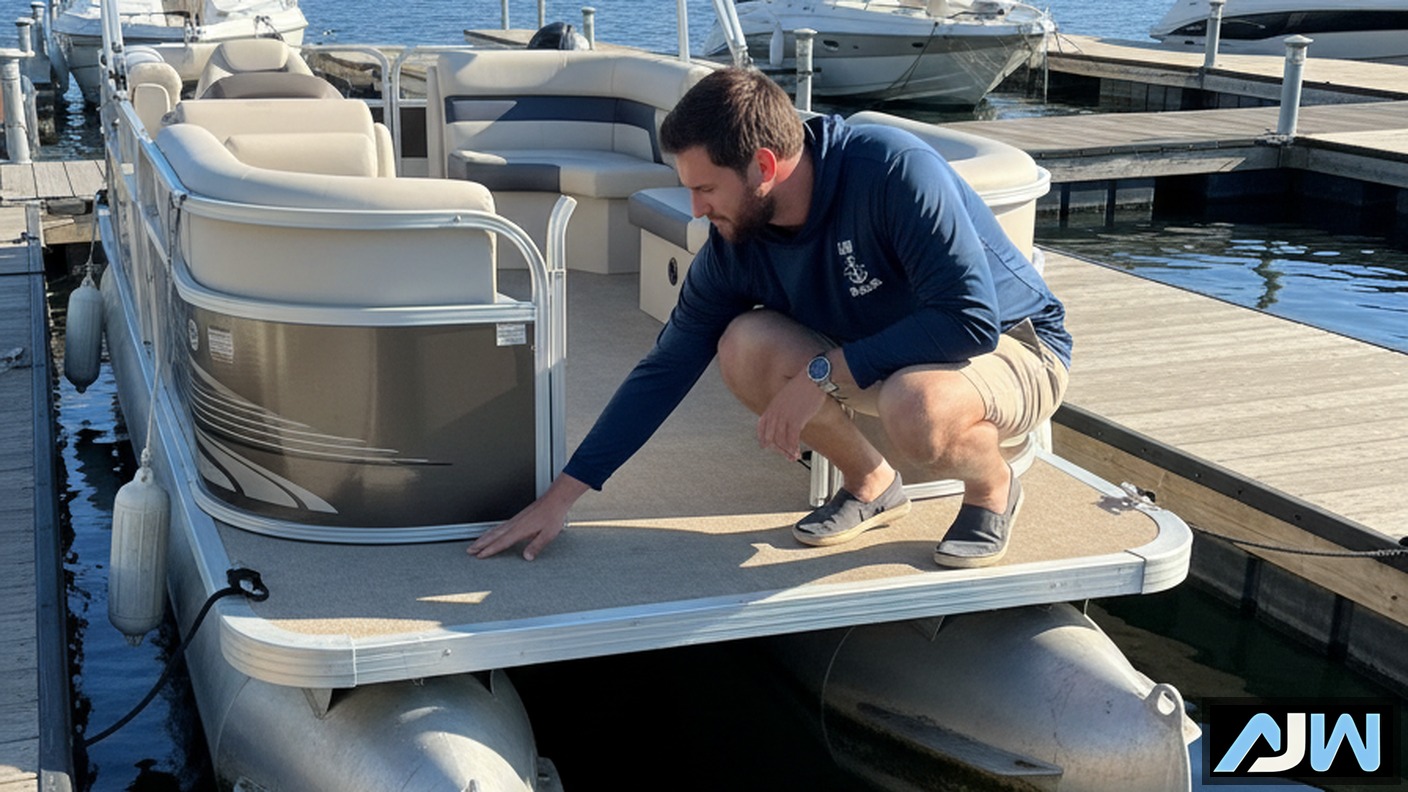
A pontoon boat interior detail on Lake Norman is one of the most common jobs I do, and it's also one of the most satisfying. The difference between a neglected interior and a properly restored one is dramatic. This post walks through what the process actually looks like on a 28-foot pontoon that sat at Crown Harbor through a full season of weekend use, kids, sunscreen, and rain.
The Starting Point — Honest Assessment
Before I touch anything, I walk the entire interior and take stock of what I'm dealing with. On this particular boat, the owner hadn't done a deep clean in over a year. The vinyl seats had sunscreen buildup baked into the surface by UV exposure. The carpet under the helm had a musty smell that told me moisture had been sitting there for weeks. There was visible mold in the seat stitching along the port side, and the cup holders were stained brown from tannin-heavy lake water.
Not every issue is fixable, and I tell owners that upfront. If mold has penetrated the foam underneath the vinyl, cleaning the surface won't solve the smell. If the carpet backing has started to delaminate, extraction will clean it but won't make it tight again. Honest triage saves everyone time and money.
The Process — Start to Finish
Vinyl and Upholstery
I start with the seats because they take the longest to do right. Every cushion gets pulled, and I clean the undersides and the fiberglass bases they sit on. For the vinyl itself, I use a marine-grade vinyl cleaner and a soft-bristle brush, working seam by seam. The stitching is where mold hides, so I spend extra time there with a detailing brush that gets into the thread channels.
After cleaning, I apply a UV-rated vinyl conditioner. This isn't optional on Lake Norman. Between May and September, the UV index regularly hits 10 or higher. Without conditioner, vinyl dries out, cracks at the seams, and fades from whatever color it started as to a chalky version of itself. The conditioner keeps the material flexible and adds a layer of UV protection that extends the life of the upholstery by seasons, not weeks.
Carpet and Flooring
Marine carpet is a different animal than household carpet. It's typically a closed-loop or snap-in style that sits on top of fiberglass or aluminum decking. When lake water gets under it and sits, you get mildew at the backing layer. I pull removable sections, clean both sides, and do a hot water extraction on the carpet itself. The deck underneath gets wiped down and dried before anything goes back in place.
On this job, the carpet under the helm station had a strong musty odor. Extraction pulled out discolored water on the first two passes. By the third pass, it ran clear and the smell was reduced significantly. I won't say it was gone completely — carpet that's held moisture for months sometimes needs a second session or replacement. I told the owner exactly that.
Hard Surfaces and Compartments
Every compartment lid gets opened. Storage bins, livewells, rod holders, cup holders — all of it gets cleaned and wiped with a marine all-purpose cleaner. The helm console gets detailed with a non-abrasive cleaner to protect the gauge faces and any touchscreen electronics. I use compressed air to blow debris out of switch panels and speaker grilles.
The aluminum or stainless trim gets cleaned with the appropriate product for the metal type. I never use aluminum brightener on stainless, and I never use stainless polish on anodized aluminum. Wrong product, wrong result.
What Comes Out and What Doesn't
Here's the honest breakdown from this particular job:
Sunscreen buildup on vinyl — came out completely with proper cleaner and agitation
Mold in seat stitching — removed about 90% visually, treated to prevent regrowth
Carpet odor — reduced significantly but not eliminated on first pass
Cup holder tannin stains — removed completely
UV fading on port-side vinyl — not reversible, but conditioner restored some depth to the color
I always tell owners what detailing can and can't do. A full pontoon interior restoration brings a boat back to a usable, clean, presentable condition. It doesn't reverse years of UV damage or replace worn-out materials. If the vinyl is cracked through, that's a re-upholstery job. If the carpet is delaminating, that's a replacement. Detailing handles everything else.
Why This Matters Before Peak Season
Lake Norman is heading into the busiest stretch of the year. Between Fourth of July traffic and every weekend through Labor Day, your pontoon is going to see heavy use. Starting the season with a clean, conditioned interior means the vinyl holds up longer, the carpet stays fresher, and you're not apologizing to guests about the smell coming from under the helm.
I run a mobile dock-to-dock service across Lake Norman — Crown Harbor, Safe Harbor, River City Marina, Holiday Harbor, and private docks from Cornelius to Denver. If your pontoon interior needs work before the summer push, give me a call at (704) 594-3948. I'll walk your boat, tell you exactly what I can fix and what I can't, and we'll get it scheduled before your next weekend on the water.