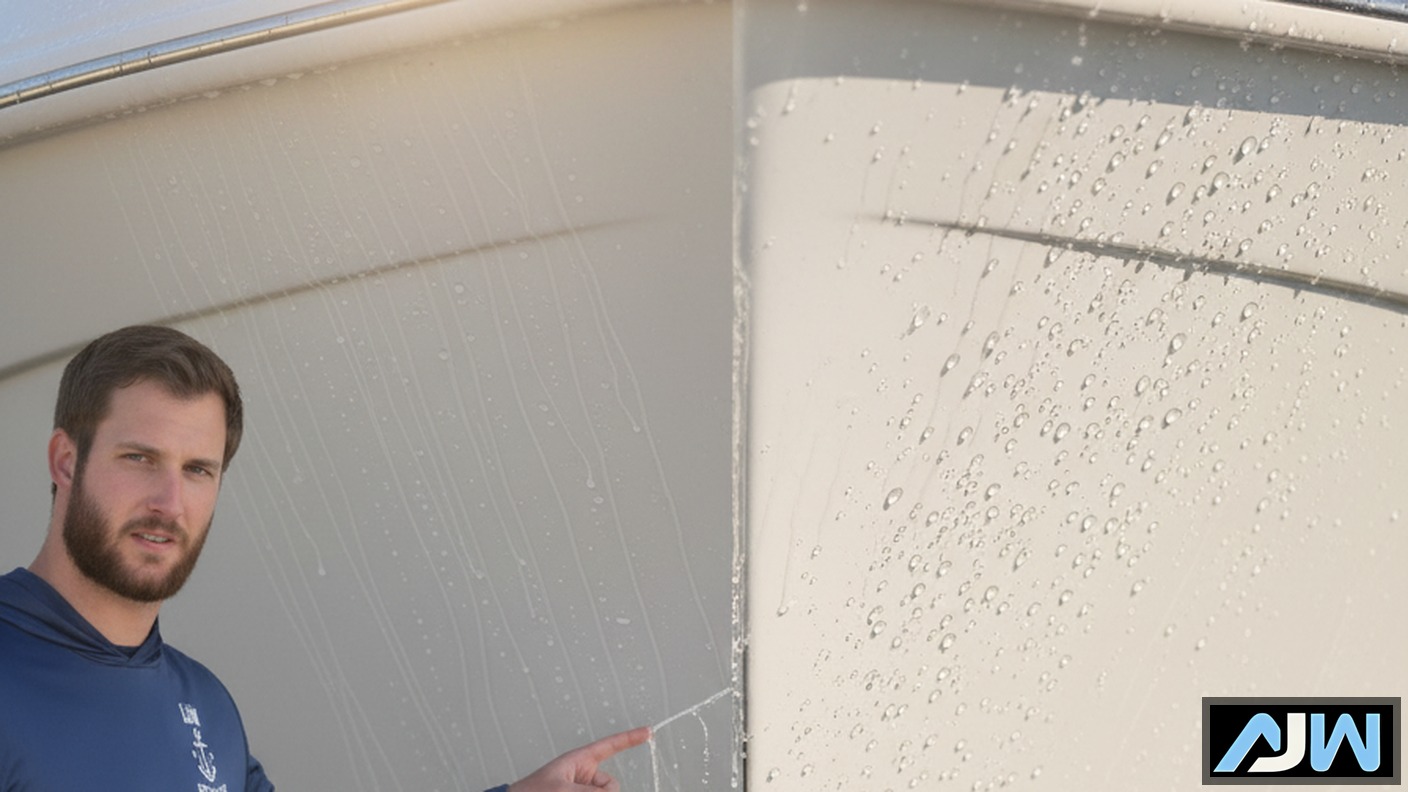
Water Spot Removal on Lake Norman Boats This Summer
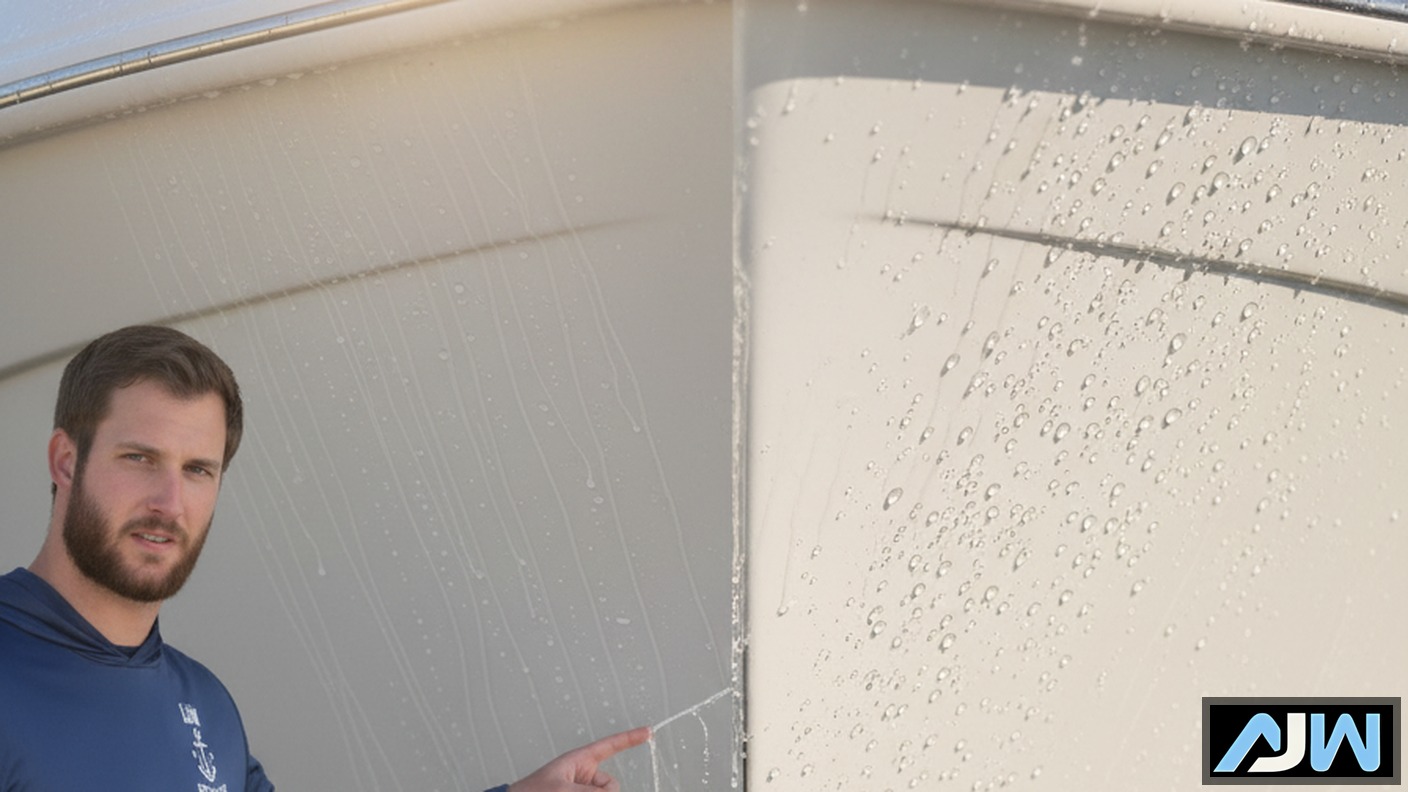
Why Water Spots Get Worse in Summer on Lake Norman
If you've noticed white, chalky rings on your boat's gel coat that won't come off with a regular wash, you're dealing with water spots — and they're about to get a lot worse. Every summer I see the same thing at Crown Harbor, Safe Harbor, and docks all along the Hwy 150 corridor: boat owners who thought a quick rinse would handle the problem, only to find the spots have etched into the surface by July.
Here's what's actually happening. Lake Norman draws from the Catawba River system, which runs through the Piedmont's granite and metamorphic bedrock. That means the water carries calcium and magnesium — the same minerals that leave deposits on your shower glass at home. When lake water dries on your gel coat, those minerals stay behind. In summer, surface temperatures on a white hull can hit 140°F in direct sun. That heat bakes the minerals into the clear coat layer, and what started as a simple water mark becomes an etched ring that soap won't touch.
The Difference Between Fresh Spots and Etched Spots
Not all water spots are the same, and knowing the difference saves you time and money. Fresh spots — the ones you see after a weekend on the water — sit on the surface. A good vinegar-water mix or a dedicated marine water spot remover will usually break them down in a few minutes. Wipe with a clean microfiber cloth and they're gone.
Etched spots are a different story. Once minerals have been baked into the gel coat by repeated sun exposure, the surface is physically damaged. You can run your fingernail across an etched spot and feel the depression. At that point, the only fix is mechanical correction — wet sanding, compound, and polish in sequence. I use a dual-action orbital polisher and work through progressively finer grits until the surface reads in the 90s on a gloss meter. It's real work, but it's the only way to bring the gel coat back to where it should be.
Why DIY Vinegar Methods Have Limits
Vinegar gets recommended everywhere online, and it does work on fresh mineral deposits. The acidity breaks down the calcium carbonate bond. But there are two problems most boat owners don't realize.
First, vinegar strips any wax or sealant you've applied. So you're removing the water spots but also removing the protection that was keeping new spots from bonding in the first place. Second, vinegar does nothing for etched spots. If the minerals have been sitting in Lake Norman sun for more than a few days, you're past the point where acid alone can fix it. You need abrasive correction.
I've had customers at River City Marina who tried vinegar for weeks, thinking they weren't using enough. By the time they called me, the spots had etched deep enough that we needed a full wet sand and compound session to level the surface.
How I Handle Water Spot Removal at the Dock
When I pull up to your slip — whether that's Holiday Harbor, a private dock off Brawley School Rd, or anywhere else on the lake — the first thing I do is assess the severity. I check a few spots with an IPA wipe to see if we're dealing with surface deposits or etched damage.
For surface-level spots, I use a professional-grade acid-based marine cleaner that's stronger than vinegar but safe for gel coat when used correctly. I let it dwell for 60–90 seconds, agitate with a soft brush, and rinse. That handles about 70% of the boats I see.
For etched spots, the process is longer:
Wet sand the affected areas with 2000–3000 grit to level the etched surface
Compound with a cutting polish on a dual-action orbital to remove sanding haze
Finish polish to restore full gloss — target is 90+ on the gloss meter
IPA wipe to remove all polishing oils before any protection goes on
Ceramic Coating Changes the Equation
Here's where prevention actually works. A Glidecoat ceramic coating creates a hydrophobic surface that causes water to bead and sheet off instead of sitting on the gel coat and drying in place. It doesn't make your boat immune to water spots — nothing does — but it means the minerals sit on top of the coating instead of bonding directly to the gel coat. A quick maintenance wash removes them before they can etch.
I've coated over 1,200 boats on Lake Norman, and the difference in maintenance between coated and uncoated hulls is night and day. Coated boats stay cleaner longer, and when spots do form, a simple mist-and-wipe removes them. Uncoated boats need compound correction two or three times a season to keep up.
Don't Let Summer Heat Turn Spots Into Permanent Damage
The single biggest mistake I see is waiting. Every day those mineral deposits sit in the sun, they bond deeper into the gel coat. What could have been a 30-minute chemical removal turns into a half-day correction job. If you can see white rings or chalky streaks on your hull right now, don't wait until the Fourth of July weekend to deal with them.
I come to your dock anywhere on Lake Norman — Cornelius, Davidson, Mooresville, Denver, Sherrills Ford, Catawba. Full mobile service, no need to trailer your boat anywhere. Call me at (704) 594-3948 and we'll get your gel coat back to where it belongs before the summer heat makes it worse.