What Is Paint Correction — And Does Your Boat Need It?
What Paint Correction Actually Means
Paint correction is one of those terms that gets thrown around a lot in detailing, but most boat owners I talk to at Lake Norman don't fully understand what it involves or whether their hull actually needs it. So let me break it down the way I explain it at the dock.
Paint correction is the process of removing defects from your gel coat or paint surface — swirl marks, scratches, oxidation haze, water spots, and dock rash — using abrasive compounds and polishes with a machine. The goal is to level out the surface so light reflects evenly, which is what gives a hull that deep, wet-looking gloss.
It's not a coating. It's not wax. It's the step that comes before any of that, and if you skip it, you're just sealing imperfections under whatever protection you apply next.
Paint Correction vs. Polishing — They're Not the Same
This is the question I get asked more than anything: can you just polish it? Sometimes yes. But polishing and paint correction aren't interchangeable.
A polish is a single finishing step that enhances gloss and removes light haze. Think of it as fine-tuning. Paint correction is the heavier work — compounding to cut through oxidation, leveling scratches, and then following up with a polish to refine the surface. On a boat that sat in a Crown Harbor slip all winter with no cover, a polish alone won't touch what's built up on that gel coat.
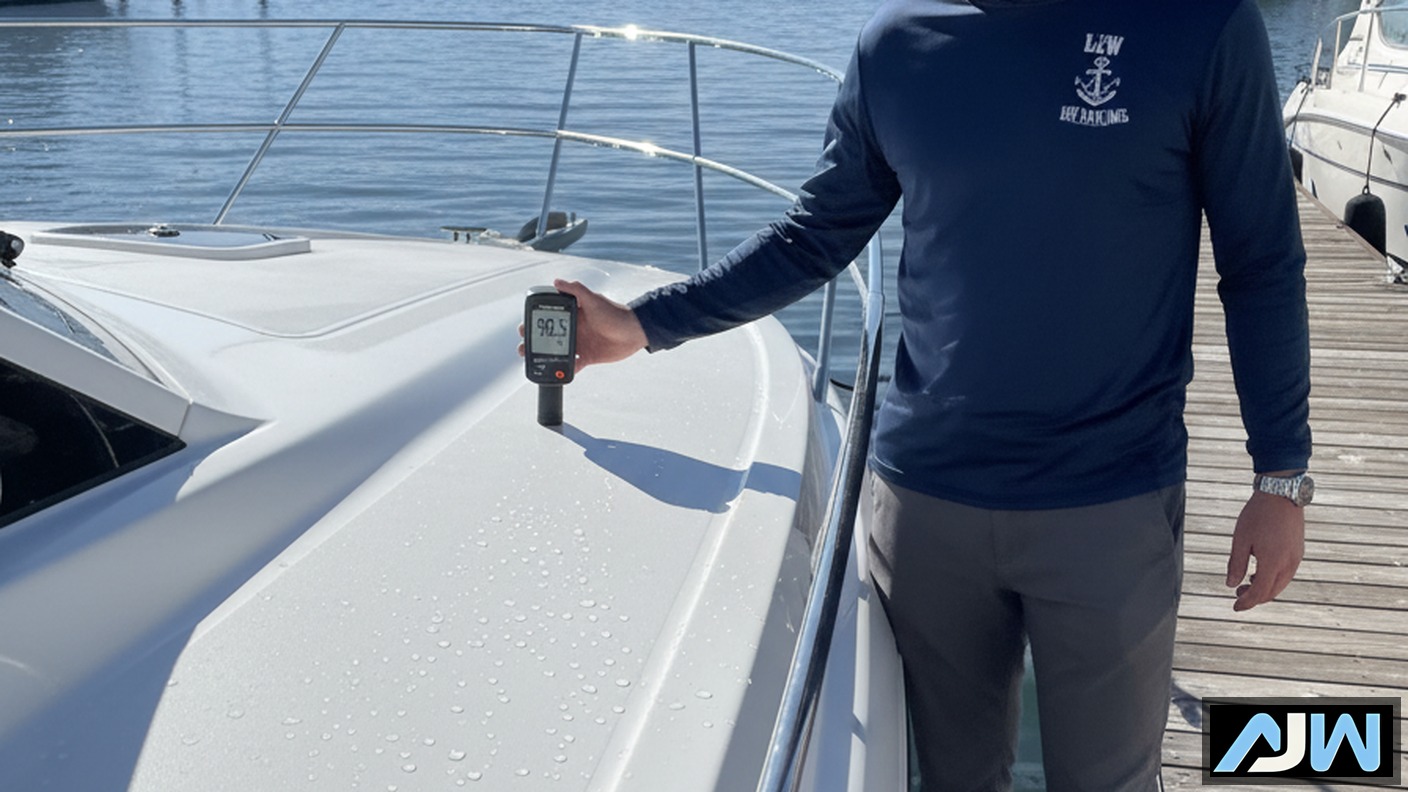
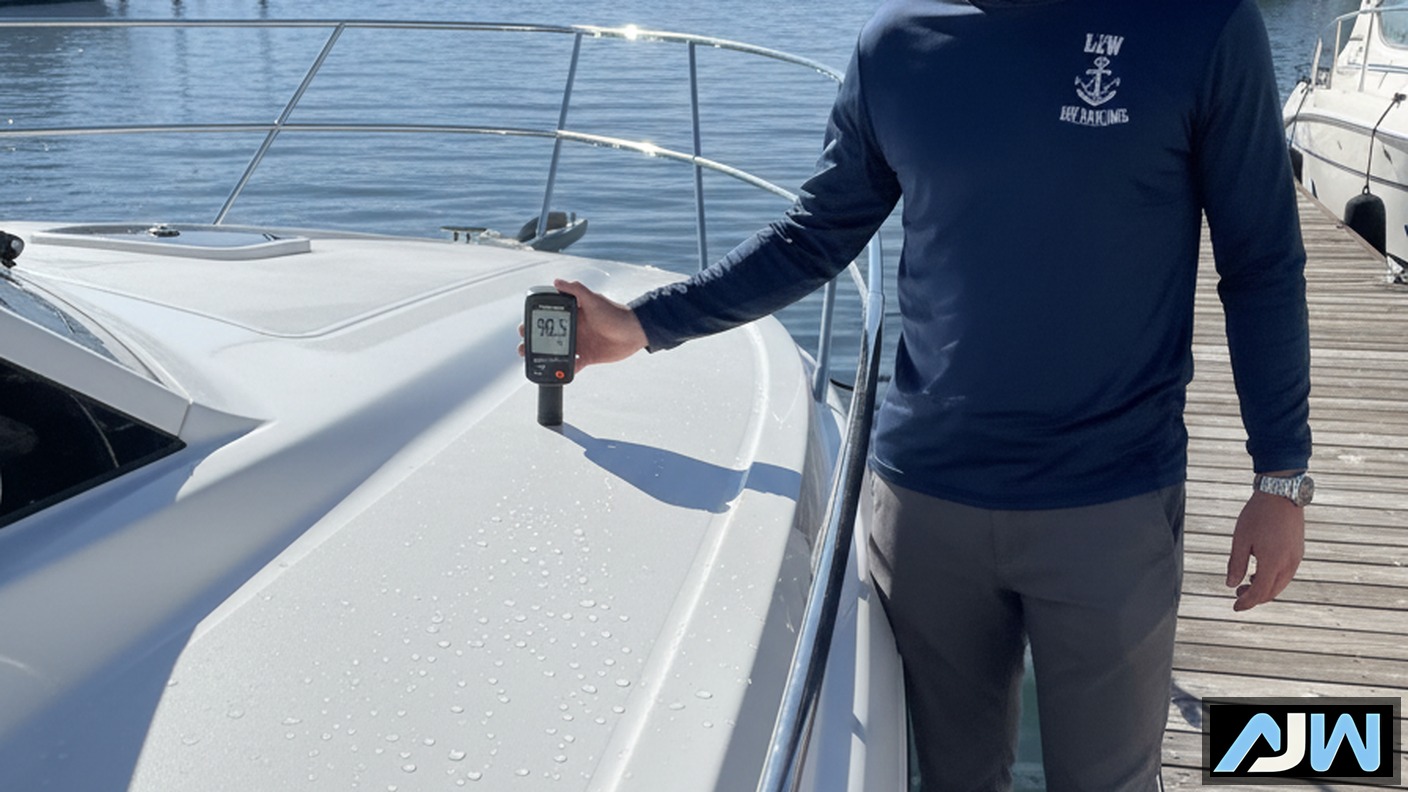
Here's how I decide at the dock. I pull out the gloss meter and take a reading. New gel coat typically reads in the mid-80s. A well-maintained boat sits in the 90s. If I'm seeing readings in the 50s or 60s, that hull needs correction — not just a quick polish.
Single-Stage vs. Multi-Stage Correction
Single-stage correction means one round of machine work — usually a medium-cut compound that handles light swirls and minor oxidation in one pass. It's efficient, and for boats that have been reasonably maintained, it's often enough to bring the gloss back into the 90s on the meter.
Multi-stage correction is what boats need when neglect has gone too far. I'm talking heavy oxidation where the gel coat has turned chalky, deep scratches from dock rash at River City Marina, or waterline staining that's etched into the surface. The process usually goes like this:
Wet sand with 1000- or 1500-grit to level deep defects
Compound with a cutting pad to remove sanding marks and heavy oxidation
Polish with a finishing pad to refine the surface and bring up the gloss
IPA wipe to strip residue and reveal the true finish before any protection goes on
That last step — the IPA wipe — is critical. Without it, leftover compound oils fill in microscratches and make the surface look better than it actually is. I don't skip it because I want honest readings when I put the meter back on the hull.
When Your Boat Actually Needs It
Not every boat on Lake Norman needs paint correction, and I'll tell you that upfront. If your gel coat still beads water and the gloss meter reads above 80, you're probably fine with a maintenance wash and a coat of wax or a ceramic top-up.
But if you're seeing chalky or faded gel coat that doesn't improve with washing, visible swirl marks under direct sunlight, yellow or brown oxidation bands at the waterline, deep scratches from dock bumps or fender rub, or water spots that won't buff out with a quick polish — correction is the right call.
This year especially, the drought has dropped Lake Norman water levels two to three feet below normal. That means hulls that were underwater all last season have been exposed to UV and air for months. I've seen more oxidation bands this spring than any season in the last ten years. Boats at Holiday Harbor and Safe Harbor are showing damage on surfaces that were previously protected by the waterline.
Cars Need Correction Too
Paint correction isn't just for boats. NC summer UV hits car clear coat just as hard, especially on dark-colored vehicles where every swirl shows. The process is nearly identical — assess with the gloss meter, compound if needed, polish, and then protect. I run the same Glidecoat Pro ceramic products on cars that I use on hulls, and the results are consistent.
What to Expect From the Process
A single-stage correction on a 22- to 26-foot pontoon takes roughly four to six hours at the dock. Multi-stage work on a larger hull or a boat with heavy oxidation can stretch to a full day or more. I work mobile — dock-to-dock anywhere on Lake Norman from Terrell to Davidson — so your boat stays in its slip the entire time.
After correction, I always recommend some form of protection. A quality marine wax lasts about three months in NC summer conditions. Ceramic coating, which is what I apply as a Glidecoat Pro Certified installer with over 1,200 boats coated, lasts two to three years with proper maintenance. The coating bonds better to a corrected surface because there's no oxidation or contamination between the ceramic and the gel coat.
Get an Honest Assessment Before Black Boat Weekend
With Black Boat Weekend coming up June 19 through 21, a lot of owners are realizing their hull doesn't look the way it should. I'd rather give you an honest reading with the gloss meter and tell you exactly what your boat needs than sell you something it doesn't. If a polish is enough, I'll say so. If it needs multi-stage correction, I'll explain why and what the results will look like. Call or text (704) 594-3948 to set up a dock-side assessment anywhere on Lake Norman.