Why Lake Norman's UV Season Makes Ceramic Coating Worth It
Lake Norman's UV Window Is Open — And Your Gel Coat Is Taking the Hit
From April through September, Lake Norman gets hammered with UV. The index hits 10 or 11 on a regular basis, and if your boat sits on a lift or in an open slip, that gel coat is absorbing every bit of it. I see it constantly — boats that looked fine in March are showing chalky oxidation bands by mid-June.
This year's drought has made things worse. Water levels are running 2–3 feet below normal, which means more hull surface is exposed to sun and air than usual. That extra strip of gel coat that's normally underwater? It's baking. And once oxidation sets in, you can't just wash it off.
What Ceramic Coating Actually Does for a Boat on Lake Norman
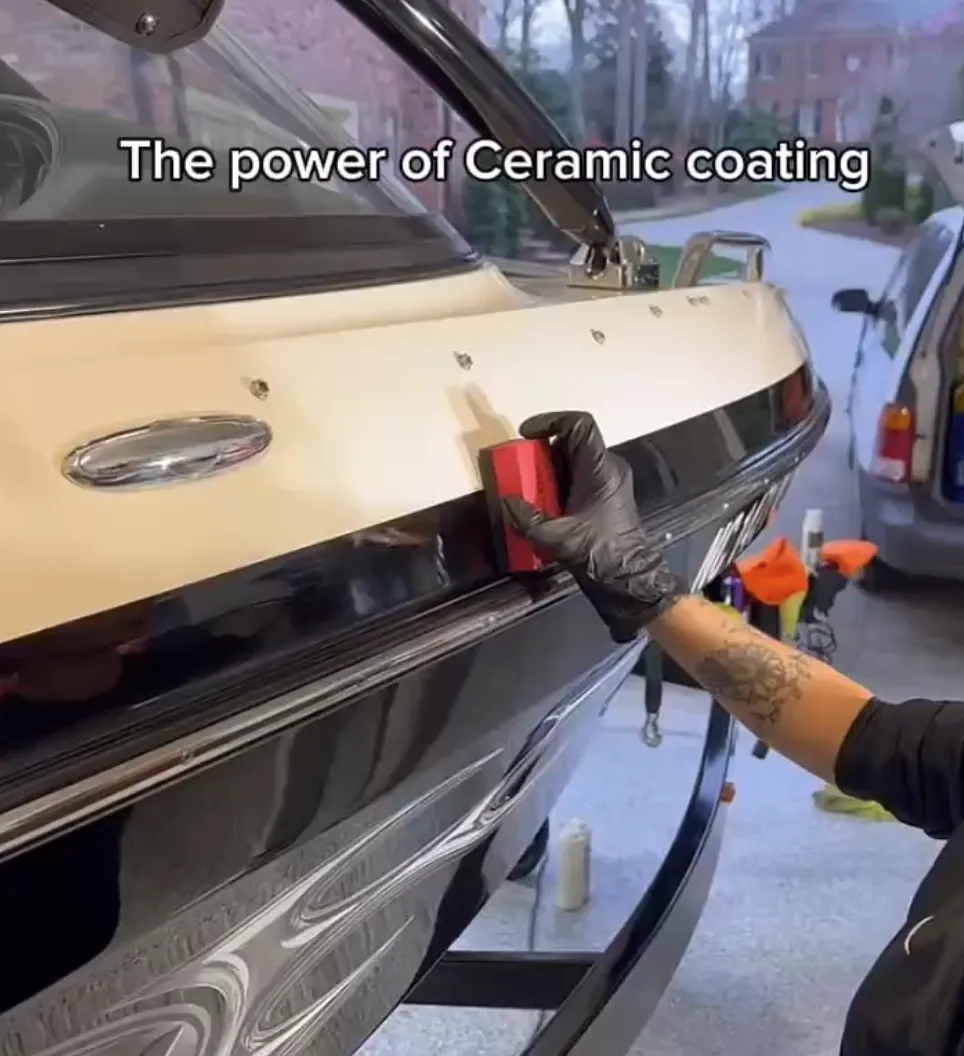
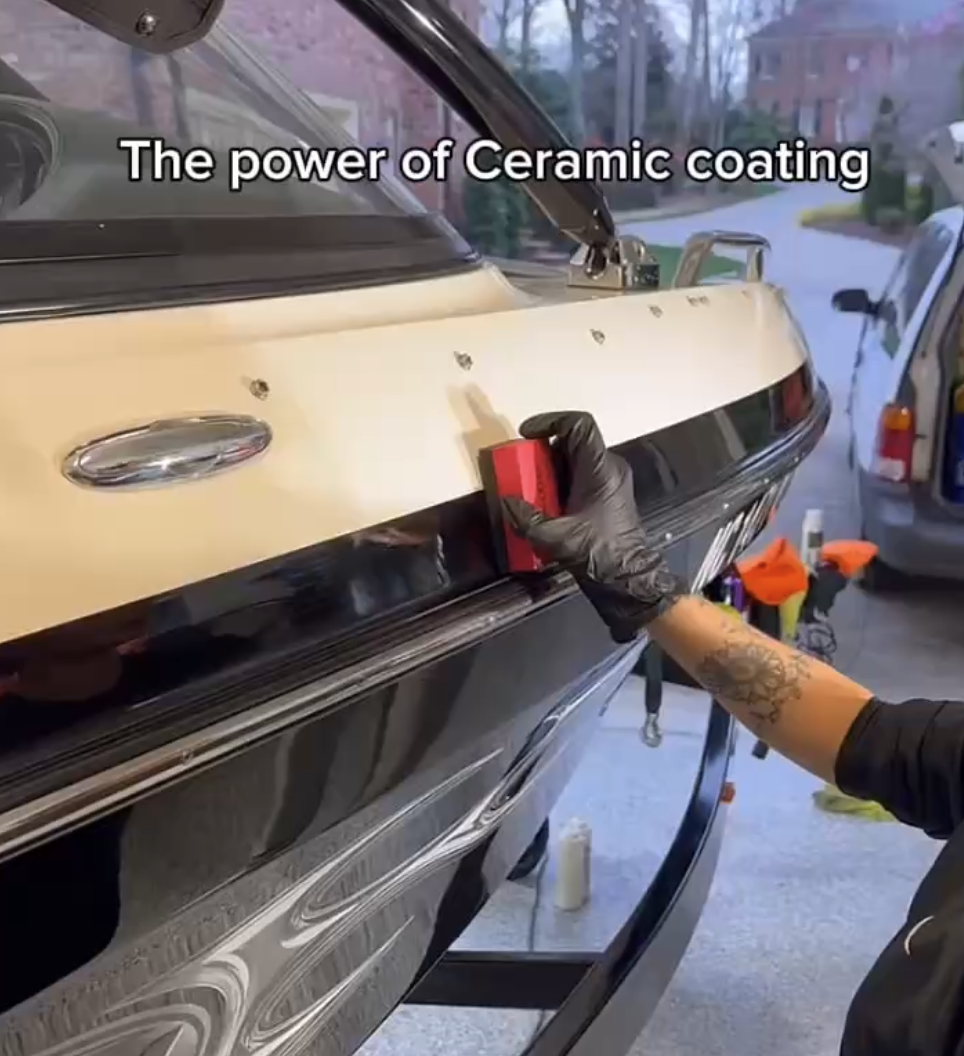
Ceramic coating creates a hard, chemical bond on top of the gel coat that blocks UV from breaking down the surface underneath. It's not a wax that sits on top and melts off in the heat — it's a nano-ceramic layer that cures rigid and stays put.
I use Glidecoat Pro on every boat I coat. After 1,200+ applications on Lake Norman, I can tell you what to expect: a fresh coating reads in the mid-90s to 100 on a gloss meter, and most boats are still above 85 at the 12-month mark. That's measurable protection, not a marketing claim.
Beyond UV, the hydrophobic surface means pollen, dock grime, bird droppings, and waterline scum rinse off with a hose instead of bonding to the surface. During pine pollen season — which peaks right now in May and June — that alone saves hours of scrubbing every week.
The Prep Work That Makes Ceramic Coating Last
Here's what most people don't realize: the coating itself is the easy part. The prep is where the job lives or dies. If you skip correction, you're locking in swirls, oxidation, and water spots under a layer of ceramic that makes them harder to fix later.
My process on every ceramic coating job runs the same way:
- Wash and decontaminate the hull — clay bar treatment to pull embedded contaminants out of the gel coat
- Wet sand if needed — for boats with heavy oxidation, I start at 1000 grit and work up to 3000 before touching a compound pad
- Compound and polish — dual-action orbital, cutting compound first, then finishing polish to bring the gloss meter into the 90s
- IPA wipe — isopropyl alcohol wipe-down to strip every trace of polish oil, ensuring the ceramic bonds directly to clean gel coat
- Ceramic application — Glidecoat Pro applied panel by panel, leveled, and left to cure
Skipping any step means the coating won't bond properly and won't last. I've fixed boats where someone applied ceramic over oxidized gel coat — it peeled within three months. That's a waste of money and time.
When Ceramic Coating Is Worth It — And When It's Not
I'll be straight with you. Ceramic coating makes the most sense for boats that stay on the water year-round or sit in uncovered slips. If your boat lives on a lift at Crown Harbor, Safe Harbor, or River City Marina and you're out every weekend from May through October, ceramic coating is going to save you real time and money on maintenance.
If your boat is trailer-stored in a garage and only hits the water a few times a season, a quality marine wax applied twice a year will do the job. I'm not going to sell you a coating when a detail and wax handles your situation just fine.
The honest calculus: ceramic coating pays for itself when your boat gets consistent UV exposure and regular use. On Lake Norman, that describes most of the boats I work on.
Why the Drought Makes This Summer Different
With water levels 2–3 feet low, I'm seeing oxidation in places that are normally protected by the waterline. Pontoon tubes are showing wider discoloration bands. Hull bottoms on runabouts have chalking where they'd normally be submerged. Aluminum pontoon tubes that usually stay wet are drying out and pitting faster than any season I can remember.
This is the year where boats that skipped protection are paying for it. A ceramic coating applied now — early June — gives you full protection through the rest of the UV season and into next spring. That's 12–18 months of measurable hydrophobic performance and UV blocking on the gel coat.
Get Your Boat Coated Before Peak Summer
I run a mobile dock-to-dock service across Lake Norman — Cornelius, Davidson, Mooresville, Denver, Sherrills Ford, and everywhere in between. The coating process takes a full day, and I work right at your slip or lift so you don't have to haul out. No marina drop-off, no waiting in line — I come to you.
If you want to see what ceramic coating can do for your boat this summer, call me at (704) 594-3948. I'll walk your boat, check the gel coat condition, and give you an honest recommendation on whether coating, correction, or a detail and wax is the right move.