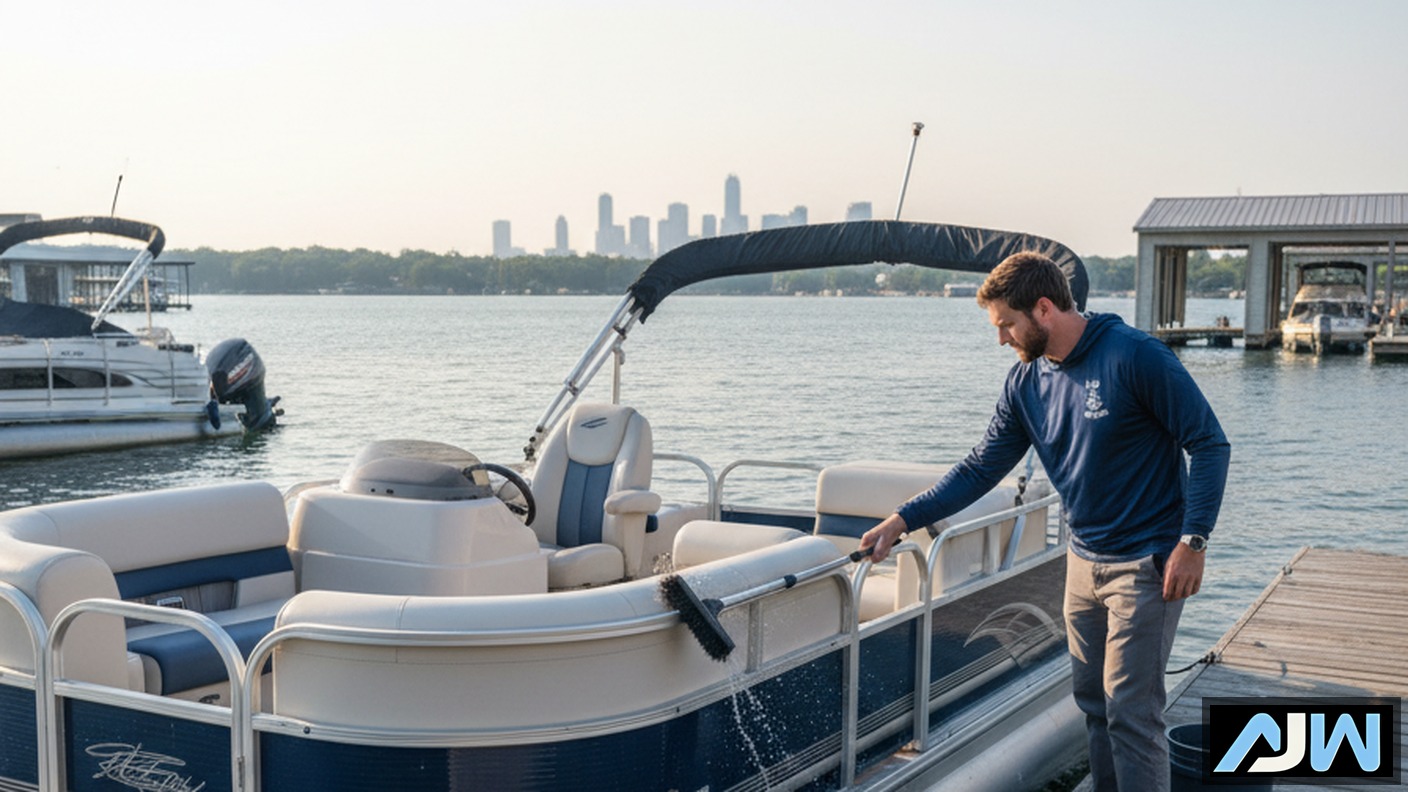
Winter Pontoon Boat Detail at Crown Harbor Lake Norman
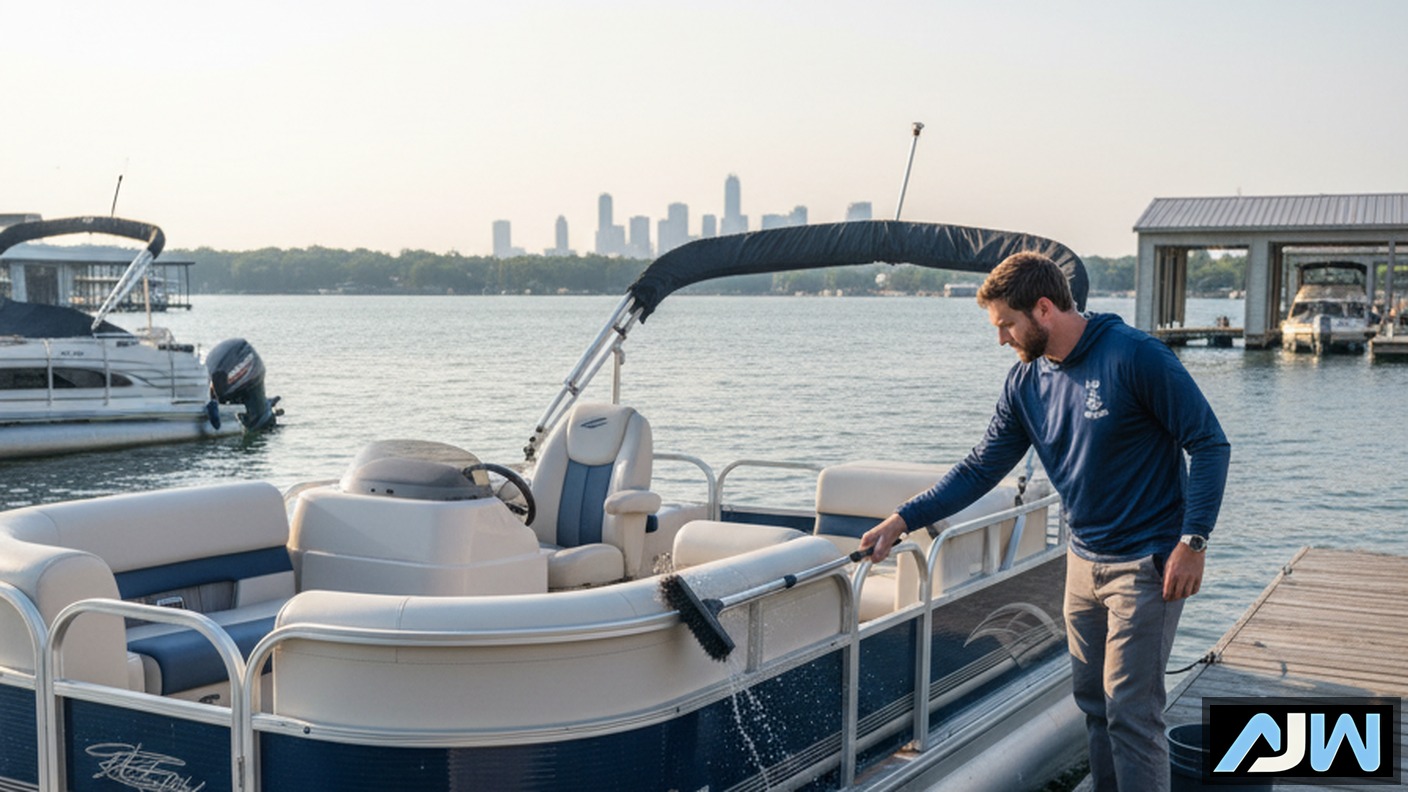
A 26-Foot Pontoon That Hadn't Moved Since October
A pontoon boat detail after winter always tells a story. This one came from a slip at Crown Harbor in Cornelius — a 26-foot Bennington that sat covered from mid-October through late April. The owner pulled the cover off, took one look at the waterline, and called me. I've detailed over 1,200 boats on Lake Norman, and what winter does to a pontoon that sits in the water for six months straight is predictable once you know what to look for.
Here's what we found, what we did about it, and what the boat looked like when we were done.
The Waterline Told the Whole Story
The first thing I noticed was the waterline stain. It wrapped around both pontoon tubes — a thick greenish-brown band of algae, mineral deposits, and iron staining that ran about four inches above the current water level. With Lake Norman running 2–3 feet below normal thanks to the ongoing drought, that band was wider than usual. More hull surface had been sitting exposed to air and UV all winter, which meant the oxidation band was wider too.
The gel coat above the waterline had turned chalky on the port side, which gets the most afternoon sun at Crown Harbor. When I ran the gloss meter across the port hull, it read 34. The starboard side was slightly better at 41. For reference, a healthy gel coat surface should read in the mid-80s to high 90s.
Algae Below, Oxidation Above
Below the waterline, both aluminum tubes had a layer of green algae that had dried into a crust during the low-water months. This is the part most boat owners underestimate. Algae doesn't just sit on top of the surface — it etches into aluminum if it stays long enough. Pressure washing alone won't get it. You need an aluminum-safe brightener that dissolves the organic material without pitting the metal.
I sprayed both tubes with a marine-grade aluminum brightener, let it dwell for about four minutes, then agitated with a stiff-bristle brush before rinsing. The tubes came back to bright silver. No pitting, no residue. That step alone took about 45 minutes on a 26-foot boat because you have to work in sections — if the brightener dries on the aluminum, it can leave streaks that are harder to remove than the algae.
Gel Coat Correction — The Real Work
The hull oxidation was the main job. On a white gel coat pontoon like this Bennington, winter UV damage shows up as a chalky, yellowish haze. It feels rough to the touch, and water doesn't bead on it anymore — it just sheets and sticks.
I started with a wet sand on the worst sections of the port side using 2000-grit, then stepped to 3000-grit. From there, it was a three-stage compound and polish sequence with a dual-action orbital. The progression matters — you can't skip the compound step and jump straight to polish, or you'll just glaze over the oxidation without actually removing it.
After the final polish, the port side gloss meter reading went from 34 to 92. Starboard went from 41 to 96. That's the kind of swing that makes job spotlights worth writing about — you can feel the difference with your hand before you even look at the numbers.
Interior — Mold Under the Seats
The cover had done its job keeping rain and debris off the deck, but it also trapped moisture underneath. When I pulled up the seat cushions, there was mold growing on the underside of the vinyl and along the storage compartment walls. The carpet had that damp smell that tells you moisture has been sitting for months.
I steam-cleaned the vinyl seats, treated the mold with a marine-grade mildew remover, and deep-cleaned the carpet. The seat bases got wiped down with an antibacterial solution. Once everything dried, I applied a UV protectant to the vinyl to slow the fading that Lake Norman's summer sun causes between June and September.
What the Owner Got Back
After about seven hours of dock-side work at Crown Harbor, here's what changed:
Aluminum tubes went from algae-crusted green to bright silver using aluminum brightener — no acid damage, no pitting
Port hull gel coat gloss meter reading went from 34 to 92 after wet sand, compound, and polish
Starboard hull went from 41 to 96 — less oxidation because of shade positioning in the slip
Interior vinyl mold removed, seats steam-cleaned, UV protectant applied to all upholstery
Carpet deep-cleaned and deodorized
Full exterior wash, waterline scrub, and hand-dry
I also recommended Glidecoat Pro ceramic coating for the hull. The owner hadn't coated before, and after seeing how bad the oxidation got in one winter, he booked the ceramic application for the following week. Ceramic won't prevent oxidation entirely, but it creates a sacrificial barrier that makes the next spring detail dramatically easier — and the gel coat stays glossy through the summer instead of hazing out by August.
Why Winter Sit Damage Gets Worse Every Year You Skip
The thing about pontoon boats that sit all winter on Lake Norman is that oxidation compounds. Year one, you get a light haze. Year two, the haze goes deeper and the wet sand step becomes mandatory. By year three, you're looking at gel coat that may not come back to factory gloss without professional intervention. The aluminum tubes follow the same pattern — algae etching gets deeper each season if you don't remove it and protect the surface.
A spring detail isn't just cosmetic. It's maintenance that protects the value of a boat that costs more to replace every year.
Book Your Spring or Summer Pontoon Detail
If your pontoon has been sitting at Crown Harbor, Safe Harbor, River City Marina, or any dock on Lake Norman, and you haven't had it detailed since last season — now is the time. I come to your dock with everything needed for a full restoration. Call or text (704) 594-3948 to get on the schedule before the summer rush fills up the rest of July and August.